Pods designed for challenging weather conditions
Not much is known about the dynamic loads a pod can experience in waves when mounted in a ship’s bow. Nevertheless, both the aft and fore pods should be designed to withstand challenging weather conditions to allow for a safe crossing without frequent service interruptions. From the model tests related to the head and bow quartering seas for the conditions with the largest significant wave heights, MARIN found that the absolute maximum loads in the instrumented pod can reach up to 30 times the values measured when sailing in calm waters at the same ship speed. On the other hand, when sailing in beam seas, the absolute maximum loads recorded in the pod were about four times the loads recorded when sailing in calm waters.
Although the loads on the hull and pods that were recorded depend on the vertical motion, which can easily be predicted by standard seakeeping numerical tools based either on strip theory or panel methods, these loads are not easy to assess numerically. This is even the case when using advanced CFD methods.
Certainly, the information provided by the model tests is invaluable when assessing the safety of the double-ended ferry in its area of operation. MARIN is a firm believer in the added value of model testing and that it remains a very important tool when designing ships, especially when it comes to innovative new designs. The next article explains the responses to the loads on the ferry.
January 2026, no. 146
Create a MARIN account to stay updated

Report
Yassir Chellaoui
Senior Project Manager
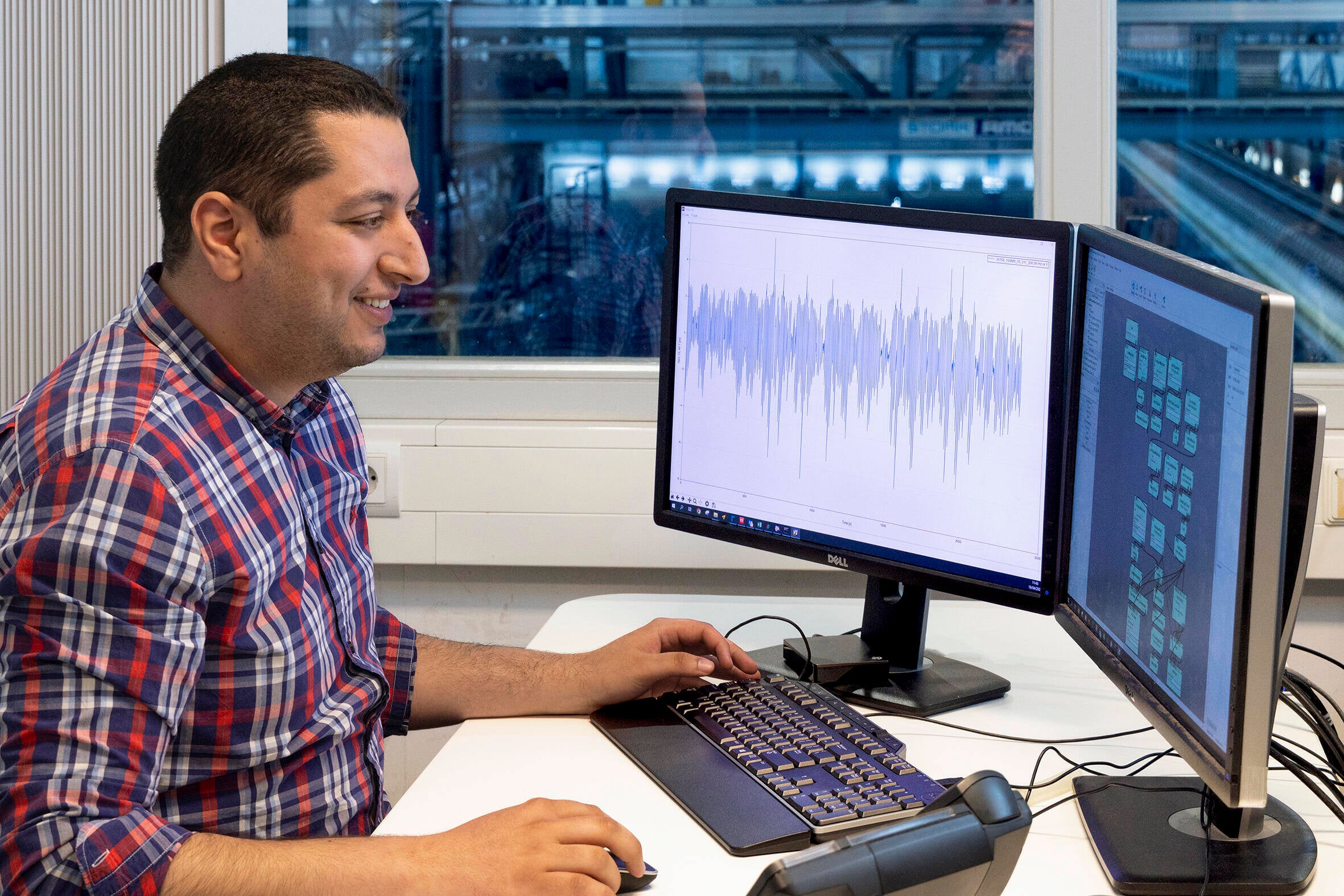
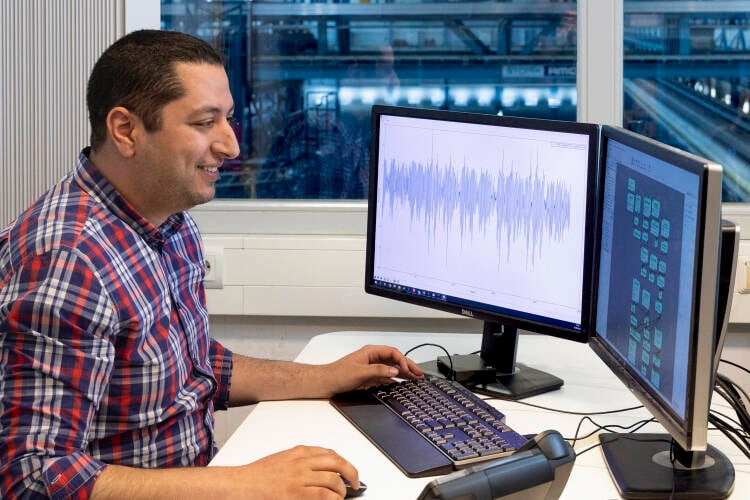
“The model was equipped with a rather special instrumentation to identify the loads and motions of the ship in waves. As a Project Engineer at the time, my first role within the team was to extrapolate the results of the model tests to full scale, to verify that the measured signals are promising, and to instantly share and discuss the first results with other colleagues and our client.
After the completion of the test programmes a second stage of the project begins. This in-depth analysis makes it possible to identify and describe the behaviour of the ship more precisely. Additionally, more calculations were made to study comfort on board, providing valuable data for the client.”

Interested? Contact us to discuss your options
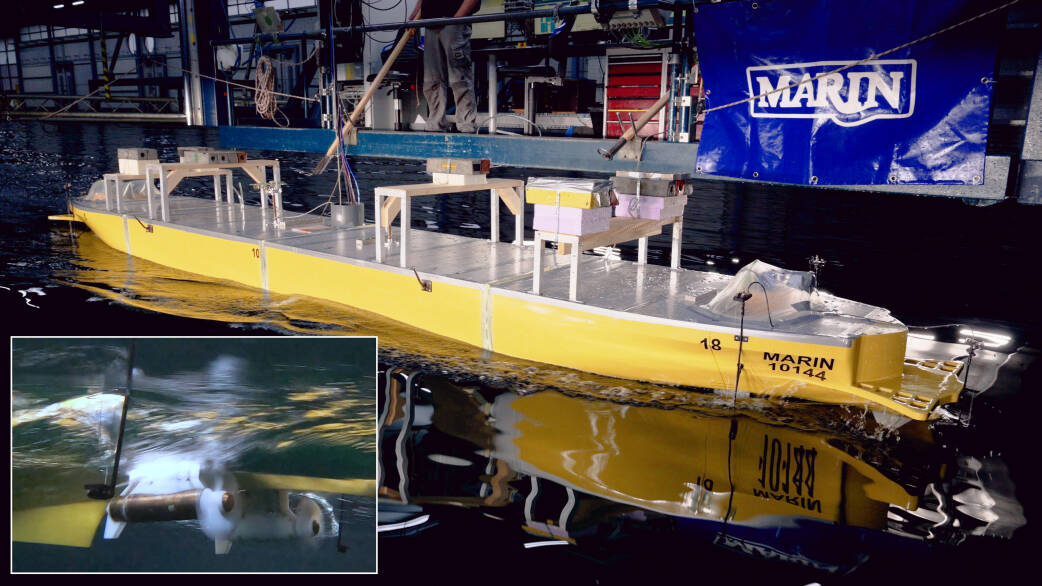
Meanwhile, the bow portside pod was instrumented with a specially designed five-component force frame designed to measure two forces and three moments. A model test campaign evaluated the loads on the hull and the instrumented pod. Several wave heights, wave directions and ship speeds were tested.
Loads significantly higher in head and bow quartering seas
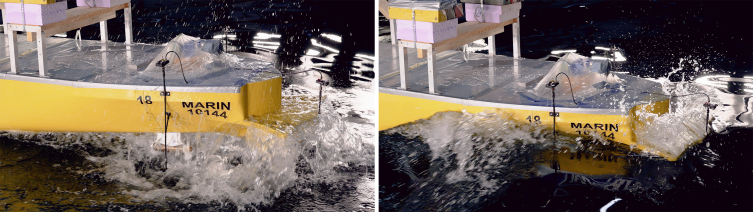
In all the tests we observed that when sailing in head and bow quartering seas, the loads experienced on the hull and the instrumented pod were significantly higher than in beam seas, which is linked to the relatively large vertical motions. In head and bow quartering seas, the bow - including the fore mounted pods - is more prone to emerge from the water surface, and then a slamming event occurs when the emerged part of the bow re-enters the water. The slamming induced forces are somehow worsened due to the relatively flat nature of bow flare.
Slamming loads
One of these aspects is wave-induced slamming, whereby waves impact the ship’s hull, or a previously emerged part of the hull re-enters the water surface. Two types were considered: slamming loads on the hull, (these may compromise the structural integrity of the hull and cause vibrations that might cause discomfort to the passengers and crew), and slamming loads on the propulsion system that may damage the pods, especially those mounted at the “bow”.
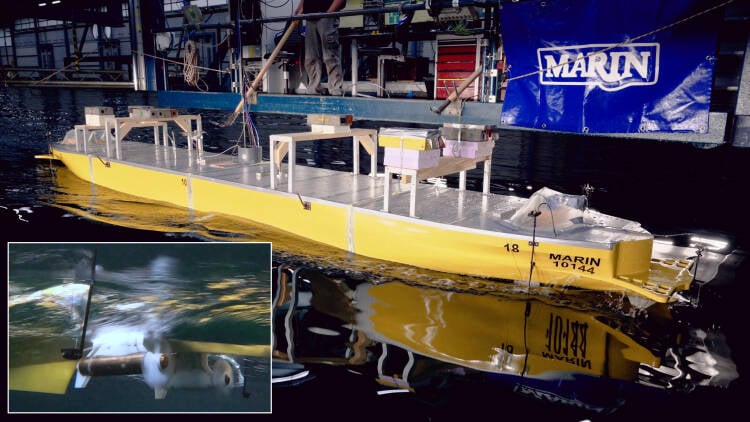
For this reason, seakeeping model tests were performed at MARIN with a complex, four-segment model (see preceding article), equipped with a flexible backbone and four pods. In order to make the test campaign as cost-effective as possible, only the fore windward pod was instrumented as the fore leeward and aft pods are expected to experience somewhat lower loads. The backbone was instrumented with three strain gauges to measure vertical bending moments at each segment connection and two accelerometers per model segment were mounted over the backbone.
Traditionally, from a hydrodynamic point of view, the optimisation of the hull lines and alignment of the appendages have played a vital role when designing double-ended ferries in order to reduce the ship’s resistance and guarantee good course-keeping ability. This is because most of these vessels are designed to operate in somewhat restricted waters.
However, the new double-ended P&O ferries are operating in the English Channel and here, significant wave heights of up to 6 m can be expected. This makes it necessary to evaluate other aspects that are usually not addressed in detail.
A double-ended ferry is of course designed to save time when manoeuvring and berthing, which in turn leads to a reduction in fuel consumption, and this is especially important when sailing on busy, relatively short routes.
Wave-induced loads and motions in operation
Figure 2: Sailing in rough conditions. Complete forward pod emergence events experienced.
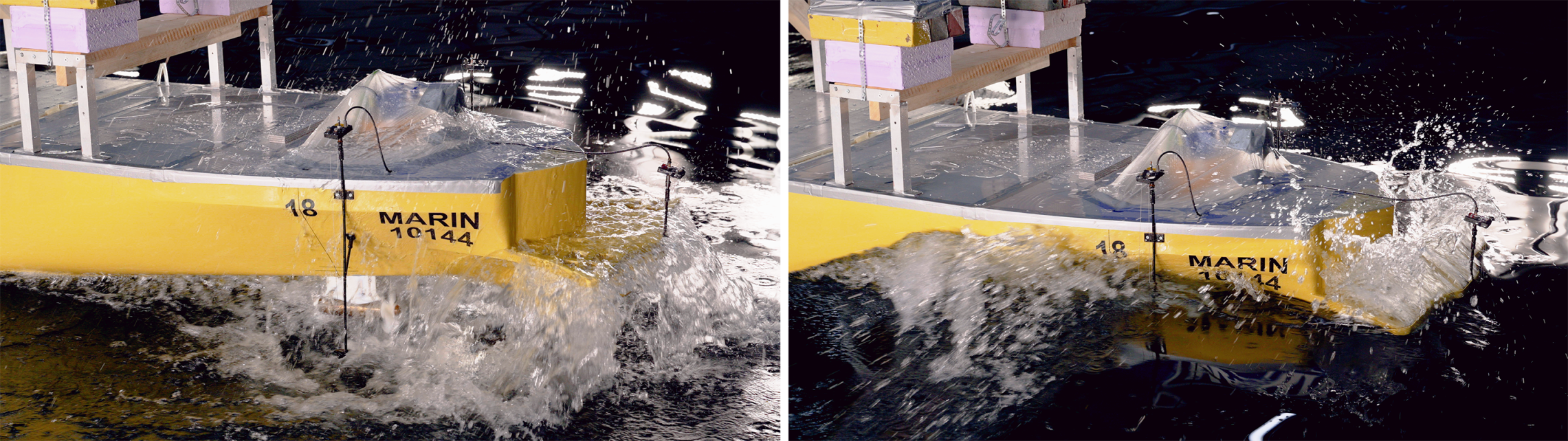
Figure 1: Sailing in typical operational conditions. Frequent propeller tip ventilation encountered at forward pods.
Regarding the structural behaviour of the hull in waves we found that the maximum absolute bending moments measured at midship during the head and bow quartering seas’ tests were from three to 12 times higher than those moments measured during the beam seas’ tests. The associated discomfort produced by the whipping vibration can be quantified using the accelerations measured on the flexible backbone. We also observed that during the head and bow quartering seas’ tests it was fairly uncomfortable for several conditions. However, during the beam seas’ tests this discomfort was negligible.


January 2026, no. 146
MARIN, Ocergy and some members of the RECORD 15+ consortium during the model tests.
Pods designed for challenging weather conditions
Not much is known about the dynamic loads a pod can experience in waves when mounted in a ship’s bow. Nevertheless, both the aft and fore pods should be designed to withstand challenging weather conditions to allow for a safe crossing without frequent service interruptions. From the model tests related to the head and bow quartering seas for the conditions with the largest significant wave heights, MARIN found that the absolute maximum loads in the instrumented pod can reach up to 30 times the values measured when sailing in calm waters at the same ship speed. On the other hand, when sailing in beam seas, the absolute maximum loads recorded in the pod were about four times the loads recorded when sailing in calm waters.
Although the loads on the hull and pods that were recorded depend on the vertical motion, which can easily be predicted by standard seakeeping numerical tools based either on strip theory or panel methods, these loads are not easy to assess numerically. This is even the case when using advanced CFD methods.
Certainly, the information provided by the model tests is invaluable when assessing the safety of the double-ended ferry in its area of operation. MARIN is a firm believer in the added value of model testing and that it remains a very important tool when designing ships, especially when it comes to innovative new designs. The next article explains the responses to the loads on the ferry.
Slamming loads
One of these aspects is wave-induced slamming, whereby waves impact the ship’s hull, or a previously emerged part of the hull re-enters the water surface. Two types were considered: slamming loads on the hull, (these may compromise the structural integrity of the hull and cause vibrations that might cause discomfort to the passengers and crew), and slamming loads on the propulsion system that may damage the pods, especially those mounted at the “bow”.
For this reason, seakeeping model tests were performed at MARIN with a complex, four-segment model (see preceding article), equipped with a flexible backbone and four pods. In order to make the test campaign as cost-effective as possible, only the fore windward pod was instrumented as the fore leeward and aft pods are expected to experience somewhat lower loads. The backbone was instrumented with three strain gauges to measure vertical bending moments at each segment connection and two accelerometers per model segment were mounted over the backbone.
Figure 2: Sailing in rough conditions. Complete forward pod emergence events experienced.
Yassir Chellaoui
Senior Project Manager
“The model was equipped with a rather special instrumentation to identify the loads and motions of the ship in waves. As a Project Engineer at the time, my first role within the team was to extrapolate the results of the model tests to full scale, to verify that the measured signals are promising, and to instantly share and discuss the first results with other colleagues and our client.
After the completion of the test programmes a second stage of the project begins. This in-depth analysis makes it possible to identify and describe the behaviour of the ship more precisely. Additionally, more calculations were made to study comfort on board, providing valuable data for the client.”
Meanwhile, the bow portside pod was instrumented with a specially designed five-component force frame designed to measure two forces and three moments. A model test campaign evaluated the loads on the hull and the instrumented pod. Several wave heights, wave directions and ship speeds were tested.
Loads significantly higher in head and bow quartering seas
In all the tests we observed that when sailing in head and bow quartering seas, the loads experienced on the hull and the instrumented pod were significantly higher than in beam seas, which is linked to the relatively large vertical motions. In head and bow quartering seas, the bow - including the fore mounted pods - is more prone to emerge from the water surface, and then a slamming event occurs when the emerged part of the bow re-enters the water. The slamming induced forces are somehow worsened due to the relatively flat nature of bow flare.
A double-ended ferry is of course designed to save time when manoeuvring and berthing, which in turn leads to a reduction in fuel consumption, and this is especially important when sailing on busy, relatively short routes.
Figure 1: Sailing in typical operational conditions. Frequent propeller tip ventilation encountered at forward pods.
Traditionally, from a hydrodynamic point of view, the optimisation of the hull lines and alignment of the appendages have played a vital role when designing double-ended ferries in order to reduce the ship’s resistance and guarantee good course-keeping ability. This is because most of these vessels are designed to operate in somewhat restricted waters.
However, the new double-ended P&O ferries are operating in the English Channel and here, significant wave heights of up to 6 m can be expected. This makes it necessary to evaluate other aspects that are usually not addressed in detail.
Wave-induced
loads and motions in operation
Regarding the structural behaviour of the hull in waves we found that the maximum absolute bending moments measured at midship during the head and bow quartering seas’ tests were from three to 12 times higher than those moments measured during the beam seas’ tests. The associated discomfort produced by the whipping vibration can be quantified using the accelerations measured on the flexible backbone. We also observed that during the head and bow quartering seas’ tests it was fairly uncomfortable for several conditions. However, during the beam seas’ tests this discomfort was negligible.
Interested? Contact us to discuss your options
Julio Polo
Project Manager


Create a MARIN account to stay updated

Report


