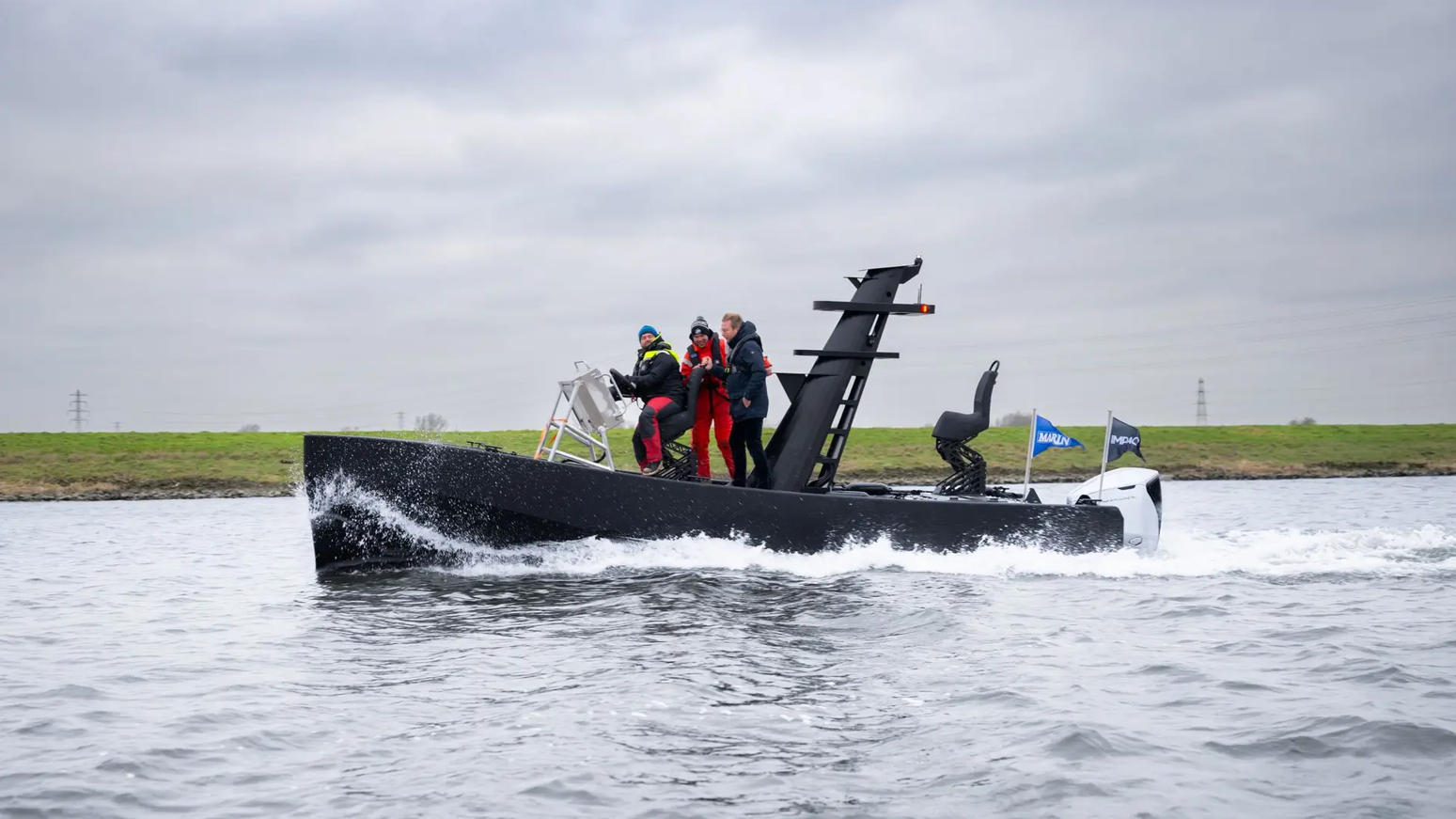
Printing a FENDER in full swing at IMPACD, followed by the second model during a test run on the Rhine.
August 2026, no. 148

Just Settels and Arnout Anneveld
ensured that the two prototypes, FENDER 1 and 2,
crossed the finish line on time.
Arnout adds: “It’s very inspiring to see how many new doors we’ve opened during this process. You explore a market; collaborate with companies you didn’t know before and create tangible things together. That’s going to open up so many possibilities for MARIN in the future.”
Egbert Ypma
Senior Project Manager at MARIN,
helped the Ministry of Defence optimise the software
Interested? Contact us to discuss your options
Create a MARIN account to stay updated

Report
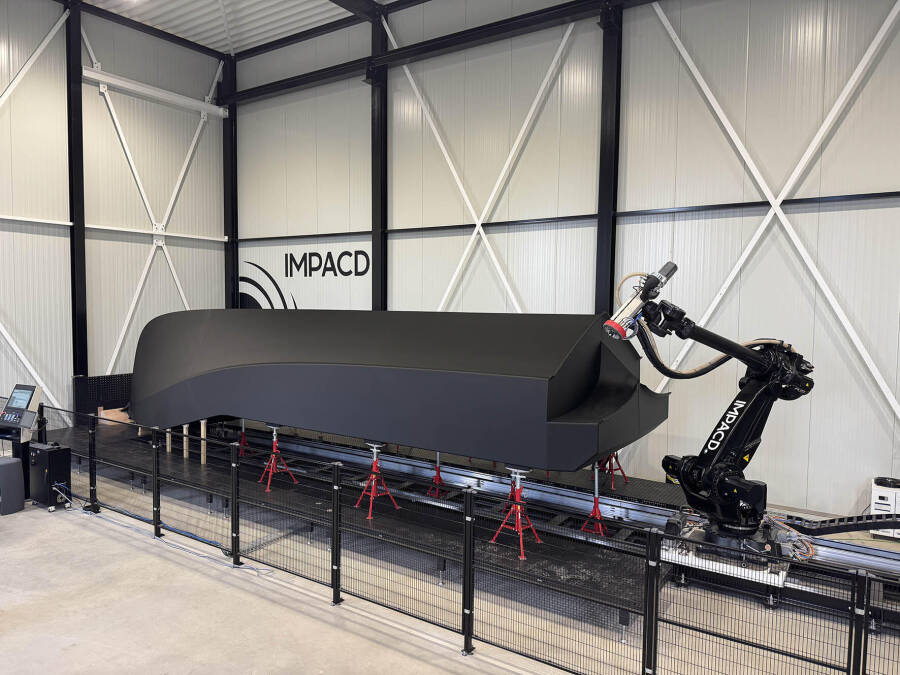

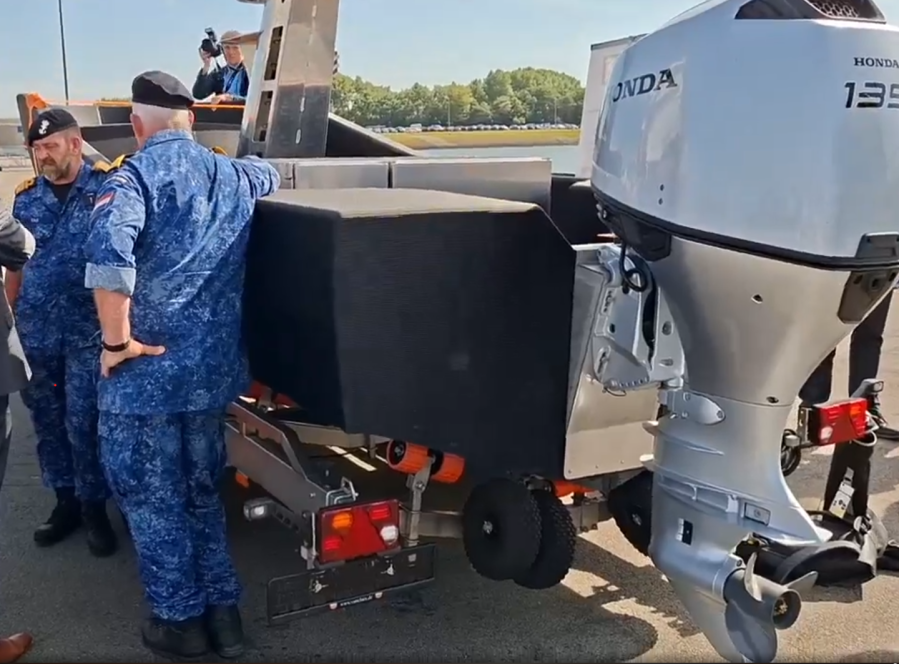
Printing in full swing at IMPACD (photo Maarten de Geus). During Maritime Uncrewed in Den Helder, the experimental printed ‘bathtub’ was unveiled.
The SeaRush project began in 2024, when the Dutch Ministry of Defence asked MARIN to help develop an ecosystem for the scalable production of affordable uncrewed surface vessels (USVs). This is the story of a team that refused to accept ‘no’ as an answer.
Faced with rising global tensions and labour shortages, the Royal Netherlands Navy is exploring operational concepts in which uncrewed vessels work alongside crewed ones. The aim is rapid, iterative innovation through new production methods, modular technology, and collaboration with non-traditional partners.
SeaRush – Innovating through trial and error
Can innovation succeed by simply starting, choosing the most challenging path, ignoring established routes, and embracing setbacks as valuable input - all under extreme time pressure? Project SeaRush suggests that it can.
The second model during a test run on the Rhine.
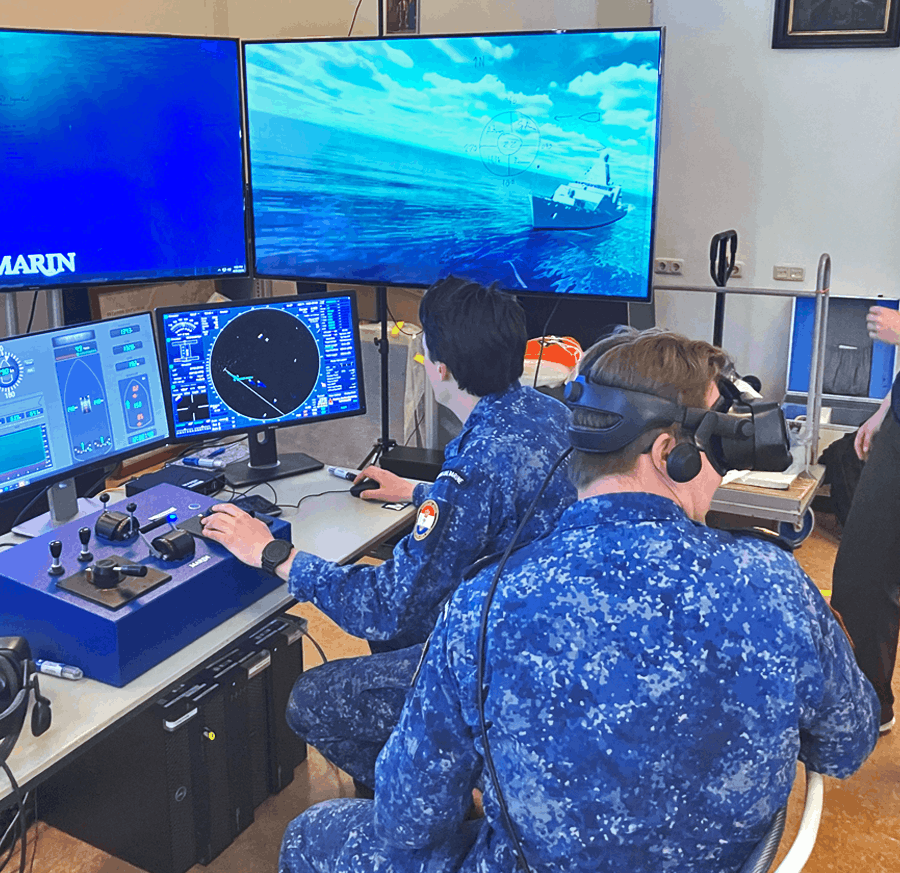
MARIN’s mobile test and research simulator in action.
Real-life trials
In June, SeaRush prototypes underwent real-life testing during MUST. Initial objectives included safe deployment, manoeuvring, and coordinated operations with a crewed frigate. After these trials, the innovation journey will continue. Lessons learned - and postponed questions - will feed into the follow-up programme, Oceans.
For now, SeaRush stands as proof that innovation at the edges of feasibility is possible - driven by experimentation, persistence, and a refusal to accept limitations.
For propulsion, the project transitioned to an inboard Diemmax engine, featuring advanced control systems. The team developed microcontroller-based simulations combining hardware control with virtual vessel data. This allowed rapid testing of different configurations, enabling flexibility and scalability in development.
The project’s success lies in the team’s willingness to question everything, revisit decisions, and act quickly. Collaboration partners shared a mindset focused on ambition, speed, and modular design. As one partner noted, when teams align in purpose and urgency, significant progress can be achieved in just a few months.
Software foundation: KNOWONE
SeaRush builds on the earlier KNOWONE programme (2022), which explored autonomous navigation and formation sailing. This work resulted in simulation software used to define future operational concepts in collaboration with naval operators. However, the rapid evolution of geopolitical tensions accelerated demand for real-world prototypes, linking KNOWONE directly to SeaRush.
Plug-and-play innovation
A major challenge was integrating software and hardware securely and efficiently. Since MARIN’s internal systems could not support experimental setups, the team created an isolated test environment. The goal was a plug-and-play system allowing quick integration of components such as sensors and engines.
A race against time
In early 2026, the urgency increased dramatically. The Ministry of Defence planned to demonstrate coordinated operations of multiple USVs during the Maritime Uncrewed Sea Trials (MUST) in June. Two new prototypes, FENDER 1 and 2, had to be ready on time.
The team constantly pushed limits—technical, regulatory, and organisational. Questions ranged from insurance and communication frequencies to compliance with autonomous sailing regulations. However, these challenges also created opportunities. For example, 3D printing enabled longitudinal structural elements to be integrated into the hull, allowing lighter construction and multifunctional use such as cable routing.
Printing the FENDER vessels revealed new challenges: their required length exceeded the printer’s capacity. The solution? Extend the printer itself. This adaptability characterised the project. When equipment or materials were unavailable, the team improvised - building facilities, switching materials, or acquiring new skills on the fly. This ‘learning by doing’ mindset became central to progress.
Government tender for Waddenzee ferries
In November 2025, the Dutch Ministry of Infrastructure and Water Management (Ministerie van Infrastructuur en Waterstaat) published a tender to renew the concessions for the ferries operating on the Waddenzee. During the tender preparation, MARIN used NEEDS to assess the transition scenario proposed by the government towards full electrification.
The tender presents an ambitious plan to reduce CO2eq emissions by converting the entire fleet to a rechargeable battery propulsion system. To support the ship operators, charging stations will be installed at all the harbours except Schiermonnikoog. The electrification of the first route (Lauwersoog to Schiermonnikoog) will occur in 2030, and the remaining routes by 2040. The results of this study are available via an online dashboard.
The initial step in preparing the framework was to gather information on the region and fleet. Data on existing ships were obtained from external sources or from MARIN's internal database. Environmental conditions were calculated using various databases: For example, ERA5 for wind direction and speed and NL Tide – HP33D for sea surface currents. Finally, the conversion to a battery propulsion system was designed utilising MARIN’s sustainable power database.
Mapping the USV ecosystem
A multidisciplinary MARIN team investigated whether a full-scale USV could be 3D-printed. The assumption was that this would enable rapid production, recyclability of materials, and flexible design adjustments. Using a proprietary search tool, they mapped Dutch companies and technologies relevant to uncrewed systems. This led them to CEAD (large-scale 3D printers) and IMPACD Boats (experience in 3D-printed vessels).
From ‘bathtub’ to working prototype
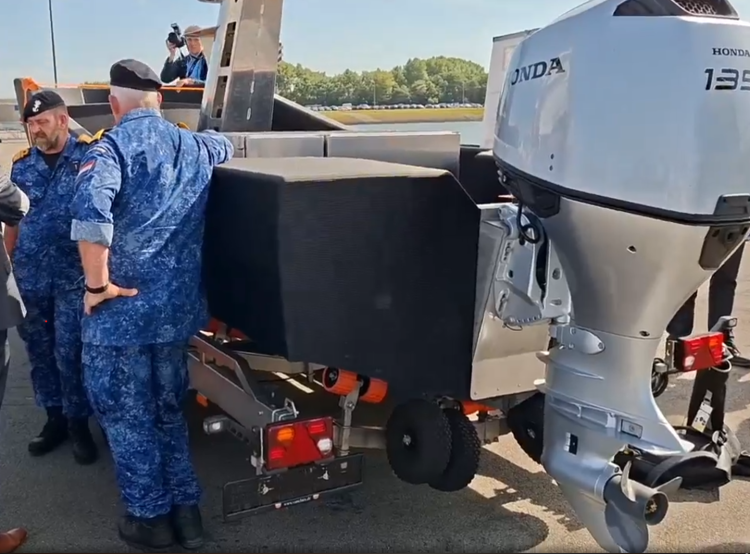
The first printed model - nicknamed the ‘bathtub’ - was purely experimental to test its feasibility. Its production was far from smooth: the printer failed twice midway through printing. Instead of restarting, the team chose the most difficult solution - continuing to print by reheating and reconnecting layers. On 9 July 2025, the so-called ‘bathtub’ was successfully presented in Den Helder during Maritime Uncrewed. Meanwhile, work had already begun on a second operational model with a remotely controlled engine.


Real-life trials
In June, SeaRush prototypes underwent real-life testing during MUST. Initial objectives included safe deployment, manoeuvring, and coordinated operations with a crewed frigate. After these trials, the innovation journey will continue. Lessons learned - and postponed questions - will feed into the follow-up programme, Oceans.
For now, SeaRush stands as proof that innovation at the edges of feasibility is possible - driven by experimentation, persistence, and a refusal to accept limitations.
For propulsion, the project transitioned to an inboard Diemmax engine, featuring advanced control systems. The team developed microcontroller-based simulations combining hardware control with virtual vessel data. This allowed rapid testing of different configurations, enabling flexibility and scalability in development.
The project’s success lies in the team’s willingness to question everything, revisit decisions, and act quickly. Collaboration partners shared a mindset focused on ambition, speed, and modular design. As one partner noted, when teams align in purpose and urgency, significant progress can be achieved in just a few months.
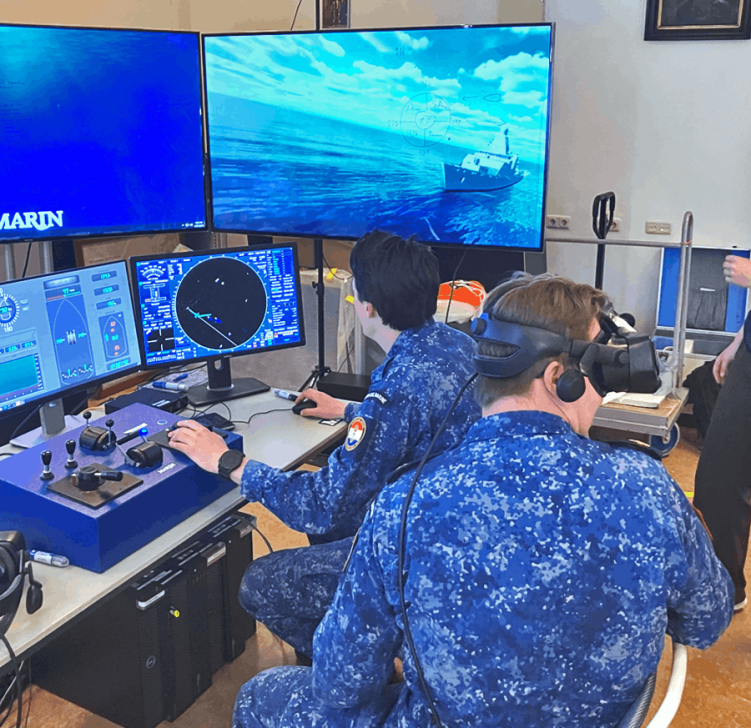
MARIN’s mobile test and research simulator in action.
Just Settels and Arnout Anneveld
ensured that the two prototypes, FENDER 1 and 2,
crossed the finish line on time.
Arnout adds: “It’s very inspiring to see how many new doors we’ve opened during this process. You explore a market; collaborate with companies you didn’t know before and create tangible things together. That’s going to open up so many possibilities for MARIN in the future.”
August 2026, no. 148
Software foundation: KNOWONE
SeaRush builds on the earlier KNOWONE programme (2022), which explored autonomous navigation and formation sailing. This work resulted in simulation software used to define future operational concepts in collaboration with naval operators. However, the rapid evolution of geopolitical tensions accelerated demand for real-world prototypes, linking KNOWONE directly to SeaRush.
Plug-and-play innovation
A major challenge was integrating software and hardware securely and efficiently. Since MARIN’s internal systems could not support experimental setups, the team created an isolated test environment. The goal was a plug-and-play system allowing quick integration of components such as sensors and engines.
A race against time
In early 2026, the urgency increased dramatically. The Ministry of Defence planned to demonstrate coordinated operations of multiple USVs during the Maritime Uncrewed Sea Trials (MUST) in June. Two new prototypes, FENDER 1 and 2, had to be ready on time.
The team constantly pushed limits—technical, regulatory, and organisational. Questions ranged from insurance and communication frequencies to compliance with autonomous sailing regulations. However, these challenges also created opportunities. For example, 3D printing enabled longitudinal structural elements to be integrated into the hull, allowing lighter construction and multifunctional use such as cable routing.
Printing the FENDER vessels revealed new challenges: their required length exceeded the printer’s capacity. The solution? Extend the printer itself. This adaptability characterised the project. When equipment or materials were unavailable, the team improvised - building facilities, switching materials, or acquiring new skills on the fly. This ‘learning by doing’ mindset became central to progress.
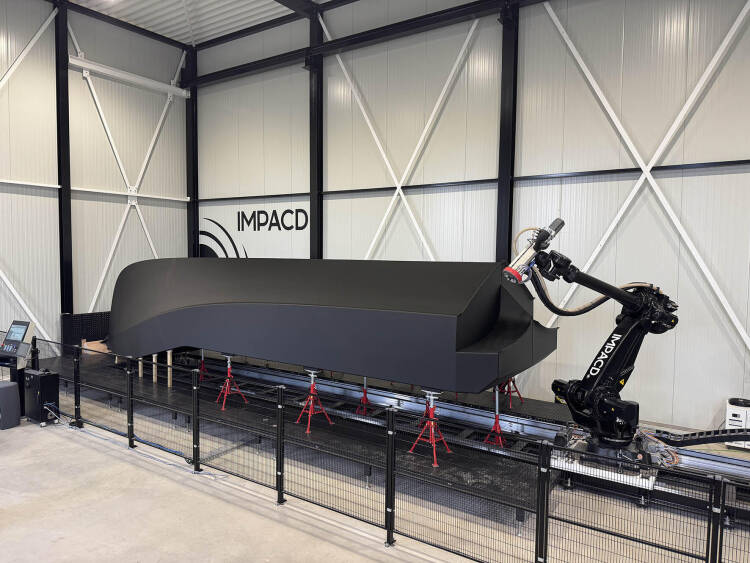
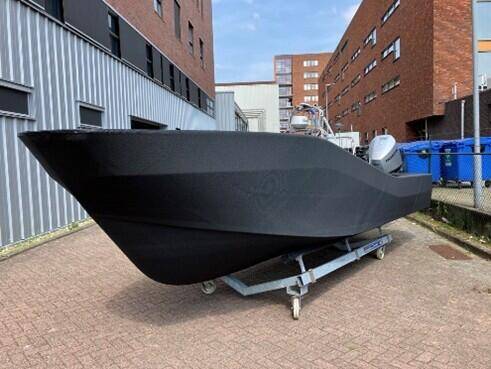
Printing in full swing at IMPACD (photo Maarten de Geus). During Maritime Uncrewed in Den Helder, the experimental printed ‘bathtub’ was unveiled.
Egbert Ypma
Senior Project Manager at MARIN,
helped the Ministry of Defence optimise the software
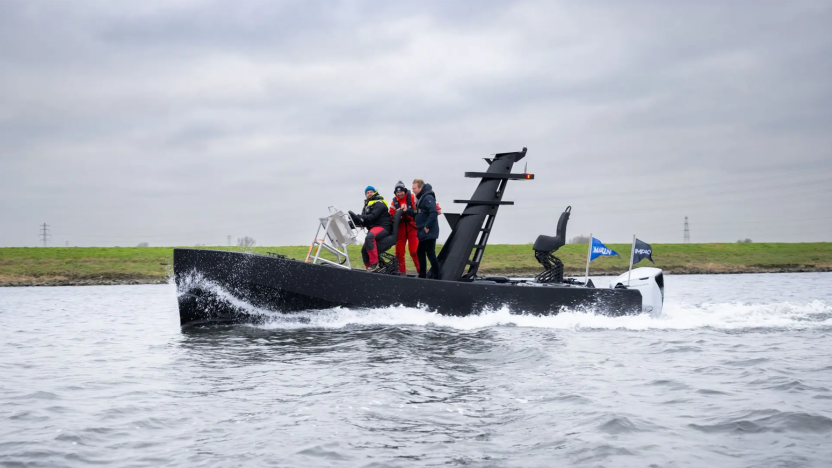
The second model during a test run on the Rhine.
Egbert Ypma
Senior Project Manager Defence
Mapping the USV ecosystem
A multidisciplinary MARIN team investigated whether a full-scale USV could be 3D-printed. The assumption was that this would enable rapid production, recyclability of materials, and flexible design adjustments. Using a proprietary search tool, they mapped Dutch companies and technologies relevant to uncrewed systems. This led them to CEAD (large-scale 3D printers) and IMPACD Boats (experience in 3D-printed vessels).
From ‘bathtub’ to working prototype
The first printed model - nicknamed the ‘bathtub’ - was purely experimental to test its feasibility. Its production was far from smooth: the printer failed twice midway through printing. Instead of restarting, the team chose the most difficult solution - continuing to print by reheating and reconnecting layers. On 9 July 2025, the so-called ‘bathtub’ was successfully presented in Den Helder during Maritime Uncrewed. Meanwhile, work had already begun on a second operational model with a remotely controlled engine.
The SeaRush project began in 2024, when the Dutch Ministry of Defence asked MARIN to help develop an ecosystem for the scalable production of affordable uncrewed surface vessels (USVs). This is the story of a team that refused to accept ‘no’ as an answer.
Faced with rising global tensions and labour shortages, the Royal Netherlands Navy is exploring operational concepts in which uncrewed vessels work alongside crewed ones. The aim is rapid, iterative innovation through new production methods, modular technology, and collaboration with non-traditional partners.



Interested? Contact us to discuss your options
Report
SeaRush – Innovating through trial and error
Can innovation succeed by simply starting, choosing the most challenging path, ignoring established routes, and embracing setbacks as valuable input - all under extreme time pressure? Project SeaRush suggests that it can.
Create a MARIN account to stay updated

Printing a FENDER in full swing at IMPACD, followed by the second model during a test run on the Rhine.


