August 2026, no. 148


Create a MARIN account to stay updated

Report
Foul-less JIP targets fuel savings
MARIN will be present at the following events. Let’s meet up again soon!
Sep 1-4
SMM Hamburg
Trade
Sep 17
Building Resilient Ecosystems
Conferences
Sep 22-25
Trade
WindEnergy Hamburg
Sep 23-26
Trade
Monaco
Yacht Show
Interested?
MARIN is seeking partners to further develop full‑scale air lubrication measurement techniques and bring the technology onboard. If you would like to know more, please contact Jeroen den Hollander to explore opportunities.

Air-lubrication measurements at full-scale
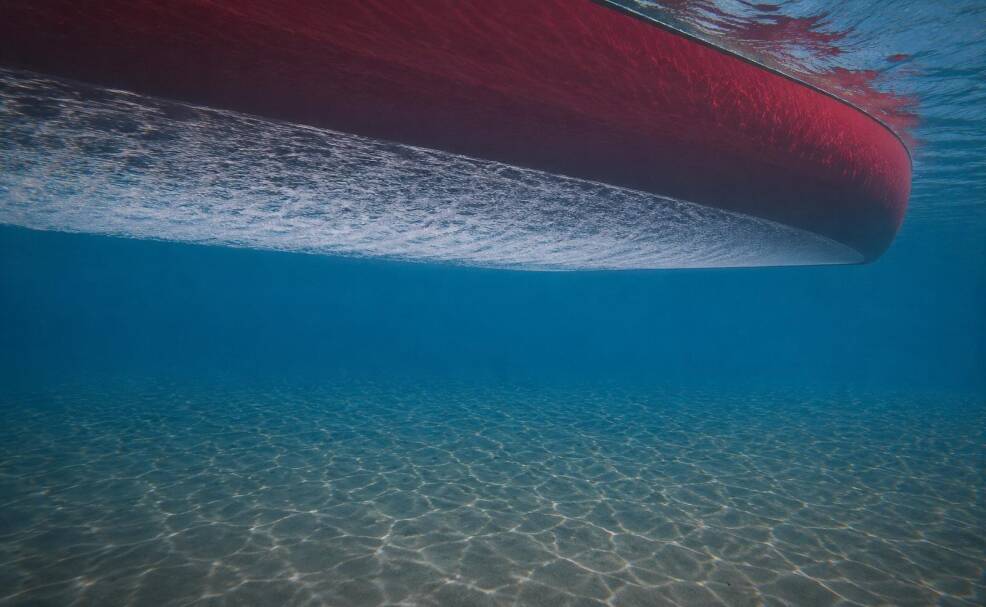
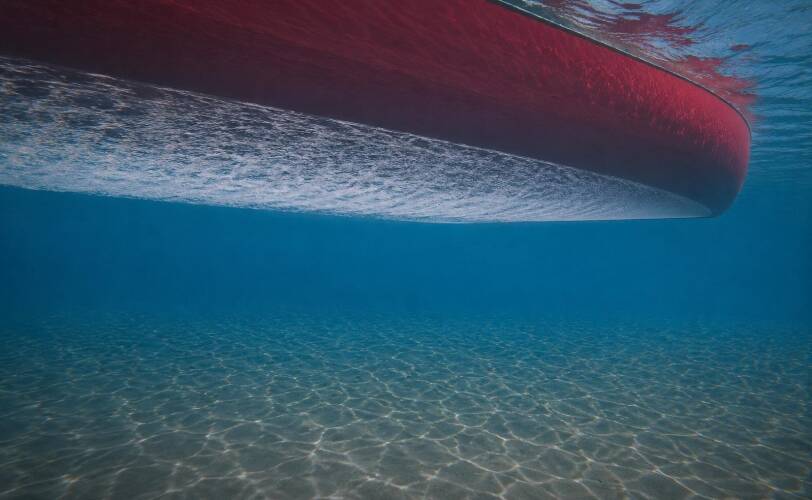
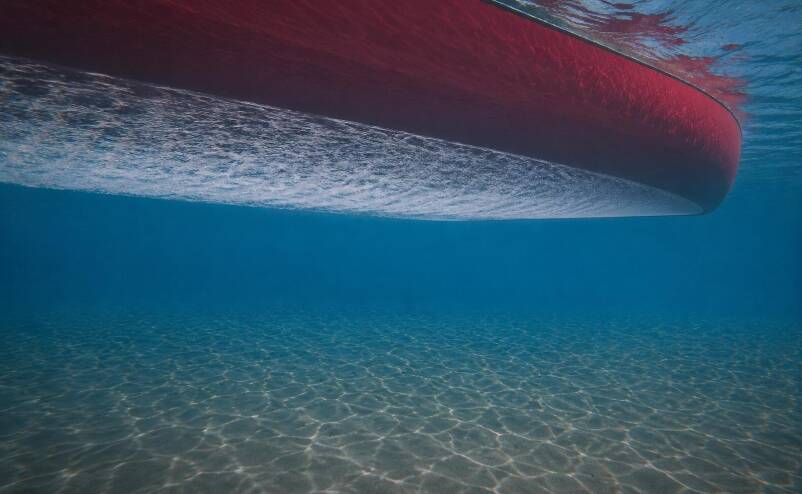
MARIN is advancing the understanding of air lubrication systems with new full-scale measurement solutions aimed at quantifying their true effectiveness.
As air lubrication systems are increasingly installed on ships, questions remain about their actual energy-saving potential and optimal operation under real conditions.
To address this, MARIN is developing a suite of innovative sensors to observe and measure the local behaviour of the air lubrication layer. These include observation equipment, gas fraction sensors and wall shear stress sensors, each providing insights into flow characteristics and performance impacts.
By combining these measurement techniques, shipowners can gain clearer, data-driven insight in how air lubrication influences speed, power and efficiency, supporting more informed operational decisions and system optimisation.
Photo: Eric Bakker
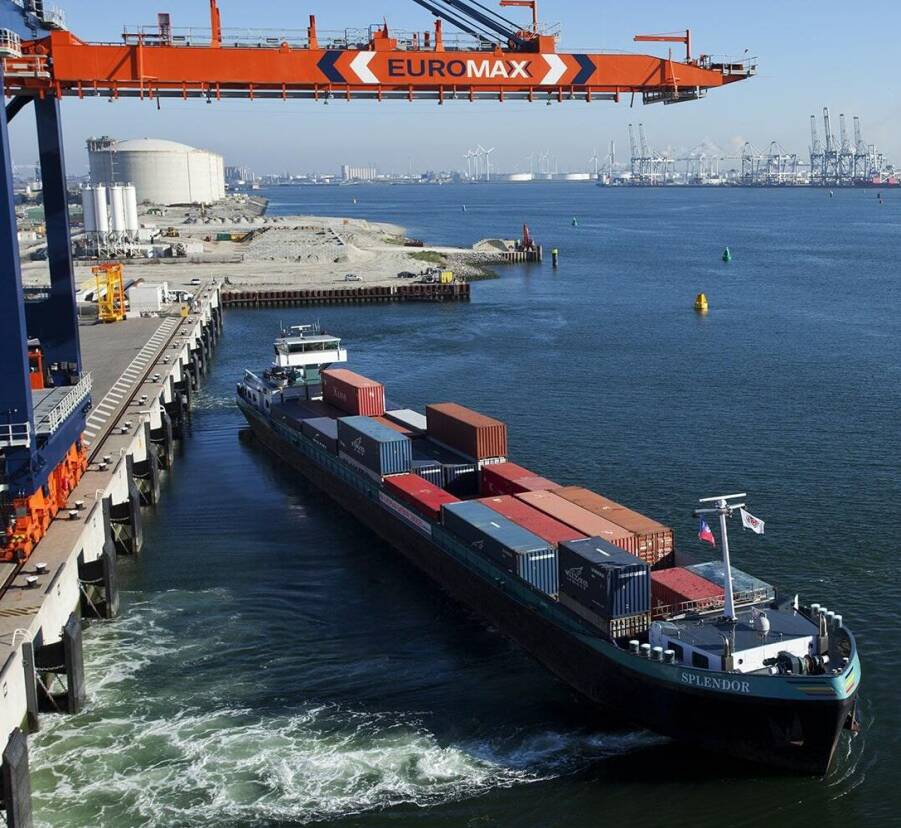
MARIN and Port of Rotterdam renew long-standing partnership
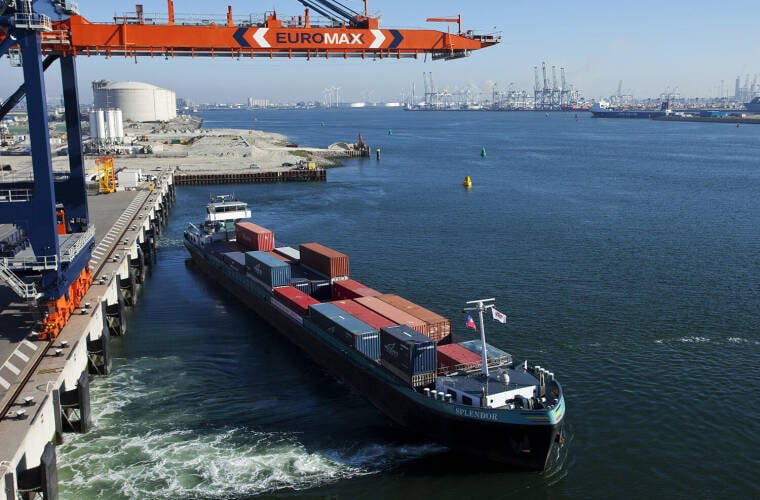
MARIN and the Port of Rotterdam Authority have strengthened their long-standing partnership with a renewed framework agreement signed on 13 May by the port authority’s CFO Vivienne de Leeuw and MARIN’s President Olaf Waals.
The collaboration spans decades, including MARIN’s involvement in the development of Maasvlakte 2. Today, joint work covers a wide range of studies, from a new city bridge near Feyenoord stadium to future berthing strategies, safety analyses for alternative fuels, and potential seaward expansion.
Replacing the 2013 agreement, the updated framework streamlines collaboration by clarifying tender procedures and intellectual property and payment arrangements—reducing time and costs for both parties.
Effective immediately, the agreement will run until at least May 2028, supporting continued innovation at one of the world’s leading ports. For more information contact Hugo Ammerlaan.
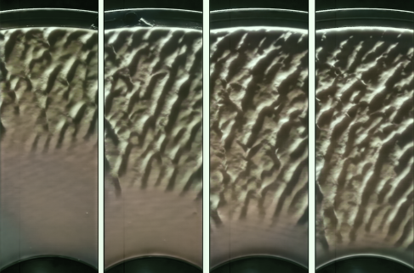
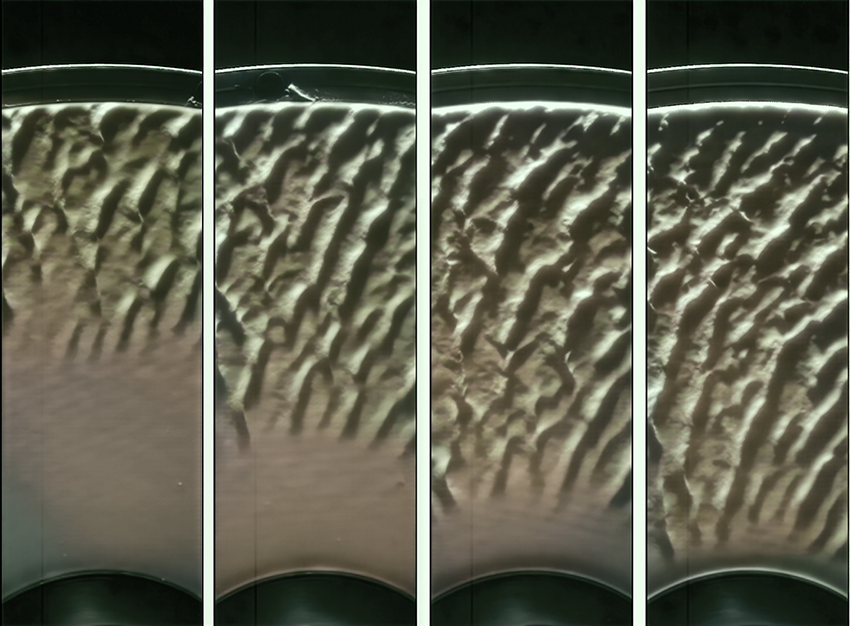
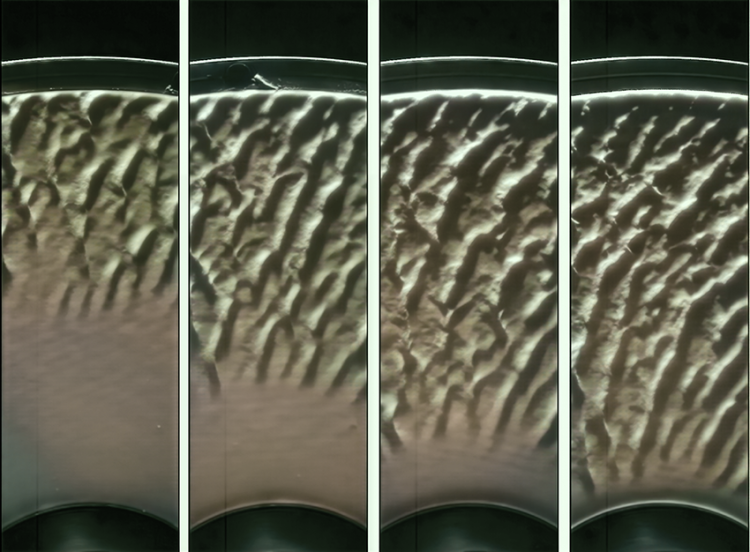
Artificial soft biofouling patterns at increasing flow velocities, leading to an increase in hydrodynamic drag.
FOUL-LESS JIP
Foul-less JIP targets fuel savings
The Foul-less Joint Industry Project aims to bring together international expertise to tackle the impact of biofouling on ship performance. A multidisciplinary initiative, the project will combine experiments, hydrodynamics, onboard sensors, data science and biological knowledge to better understand and predict how fouling affects fuel consumption.
Biofouling can significantly increase double fuel consumption, yet its effects remain difficult to measure and predict. The Foul-less JIP will integrate measurements, modelling, and operational data to deliver a decision‑support toolbox for optimising hull maintenance and coating strategies.
Participants will gain direct access to validated methods, data and tools to better understand and manage biofouling in practice, reduce uncertainty in performance evaluation, and strengthen their ability to make informed, cost-effective decisions.
If you would like to join the JIP, please visit
marin.nl/jips/foul-less or contact Ignacio Martinez Samalea.
At marin.nl/publications we offer a wide selection of papers. Create a free MARIN account for unlimited access. The most recent papers include:
Sharman, K. T., Koop, A., Bouman, G., Ridder, E.-J. de, Renewable and Sustainable Energy Reviews, Volume 241, Jul 14, 2026
Critical review and recommendations for scaled model testing of floating offshore wind turbines

Ferrari, V., Sutulo, S., Guedes Soares, C., Innovations in Maritime Technology and Engineering, May 26, 2026
Application of orthogonal algebraic polynomials for description of manoeuvring hydrodynamic forces
Koop, A., Oud, G., Frickel, E., Wilde, J. de, 45th International Conference on Ocean, Offshore and Arctic Engineering (OMAE2026), Tokyo, Japan, Jun 8, 2026
CFD Investigation for Vortex-Induced Vibration of Flexible Risers

MARIN will be present at the following events. Let’s meet up again soon!
Sep 1-4
SMM Hamburg
Trade
Sep 17
Building Resilient Ecosystems
Conferences
Sep 22-25
Trade
WindEnergy Hamburg
Sep 23-26
Trade
Monaco
Yacht Show

January 2026, no. 146
Foul-less JIP targets fuel savings
Create a MARIN account to stay updated

Report
Interested?
MARIN is seeking partners to further develop full‑scale air lubrication measurement techniques and bring the technology onboard. If you would like to know more, please contact Jeroen den Hollander to explore opportunities.
Air-lubrication measurements at full-scale
MARIN is advancing the understanding of air lubrication systems with new full-scale measurement solutions aimed at quantifying their true effectiveness.
As air lubrication systems are increasingly installed on ships, questions remain about their actual energy-saving potential and optimal operation under real conditions.
To address this, MARIN is developing a suite of innovative sensors to observe and measure the local behaviour of the air lubrication layer. These include observation equipment, gas fraction sensors and wall shear stress sensors, each providing insights into flow characteristics and performance impacts.
By combining these measurement techniques, shipowners can gain clearer, data-driven insight in how air lubrication influences speed, power and efficiency, supporting more informed operational decisions and system optimisation.
Back to In Short
MARIN and Port of Rotterdam renew long-standing partnership
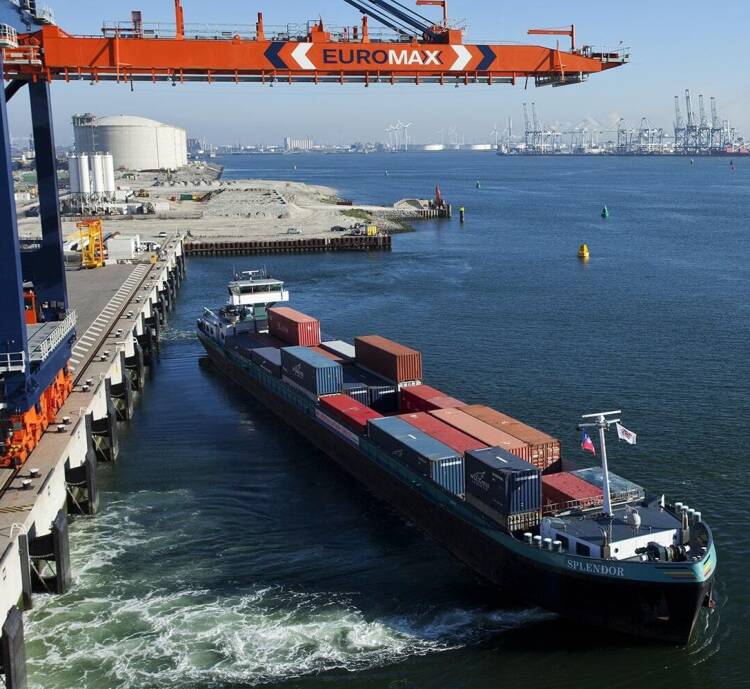
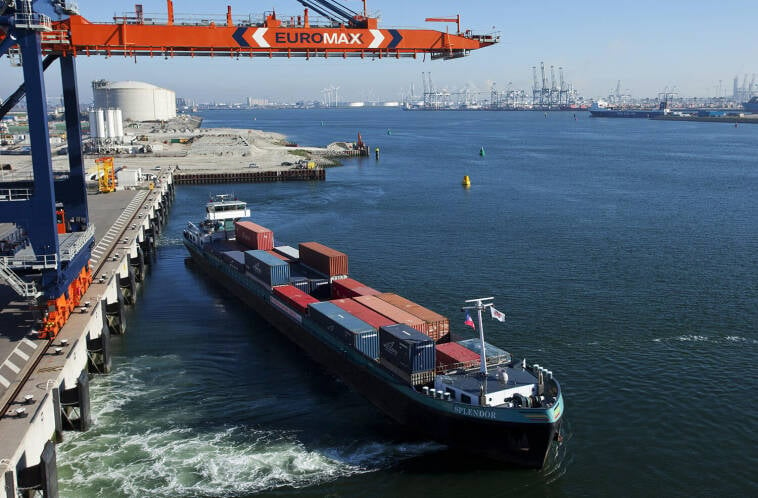
MARIN and the Port of Rotterdam Authority have strengthened their long-standing partnership with a renewed framework agreement signed on 13 May by the port authority’s CFO Vivienne de Leeuw and MARIN’s President Olaf Waals.
The collaboration spans decades, including MARIN’s involvement in the development of Maasvlakte 2. Today, joint work covers a wide range of studies, from a new city bridge near Feyenoord stadium to future berthing strategies, safety analyses for alternative fuels, and potential seaward expansion.
Replacing the 2013 agreement, the updated framework streamlines collaboration by clarifying tender procedures and intellectual property and payment arrangements—reducing time and costs for both parties.
Effective immediately, the agreement will run until at least May 2028, supporting continued innovation at one of the world’s leading ports. For more information contact Hugo Ammerlaan.
Back to In Short
FOUL-LESS JIP
The Foul-less Joint Industry Project aims to bring together international expertise to tackle the impact of biofouling on ship performance. A multidisciplinary initiative, the project will combine experiments, hydrodynamics, onboard sensors, data science and biological knowledge to better understand and predict how fouling affects fuel consumption.
Biofouling can significantly increase double fuel consumption, yet its effects remain difficult to measure and predict. The Foul-less JIP will integrate measurements, modelling, and operational data to deliver a decision‑support toolbox for optimising hull maintenance and coating strategies.
Participants will gain direct access to validated methods, data and tools to better understand and manage biofouling in practice, reduce uncertainty in performance evaluation, and strengthen their ability to make informed, cost-effective decisions.
If you would like to join the JIP, please visit marin.nl/jips/foul-less or
contact Ignacio Martinez Samalea.
Foul-less JIP targets fuel savings
Back to In Short
At marin.nl/publications we offer a wide selection of papers. Create a free MARIN account for unlimited access. The most recent papers include:
Koop, A., Oud, G., Frickel, E., Wilde, J. de, 45th International Conference on Ocean, Offshore and Arctic Engineering (OMAE2026), Tokyo, Japan, Jun 8, 2026
CFD Investigation for Vortex-Induced Vibration of Flexible Risers

Ferrari, V., Sutulo, S., Guedes Soares, C., Innovations in Maritime Technology and Engineering, May 26, 2026
Application of orthogonal algebraic polynomials for description of manoeuvring hydrodynamic forces
Sharman, K. T., Koop, A., Bouman, G., Ridder, E.-J. de, Renewable and Sustainable Energy Reviews, Volume 241, Jul 14, 2026
Critical review and recommendations for scaled model testing of floating offshore wind turbines
Back to In Short