Originally the BlueRoute application (blueroute.application.marin.nl) was developed in the WiSP2 project as a tool to quickly evaluate the potential of wind propulsion for any route on the planet. The effect on fuel savings are calculated by combining the wind statistics with a basic performance model of the ship with wind propulsors.
Supported by the WiSP3 project and the BlueRoute user group, the basic way of defining the ship and wind propulsors has recently been extended. This gives enormous flexibility to the users.
Resolving 4DoF
It is now possible to make a model of the ship and wind propulsors both using limited data at an early design stage - aided by MARIN’s prediction methods - and tables with high fidelity performance data. This data is usually obtained from wind tunnel, tank tests or CFD at a later design stage. The extended models allow the application to resolve a 4DoF (thrust, side force, yawing moment and heeling moment) equilibrium of the wind propelled vessel, instead of only the 1 DoF (thrust) equilibrium. This is required for a more accurate level II and III assessment as described in [ITTC 7.5-02-03-01.9 Guideline predicting the power saving of wind powered ships].
Shortest route identified in just a few clicks
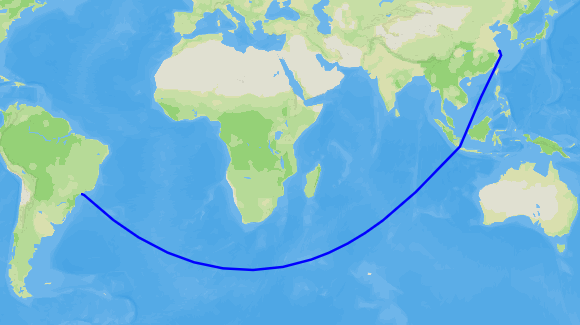
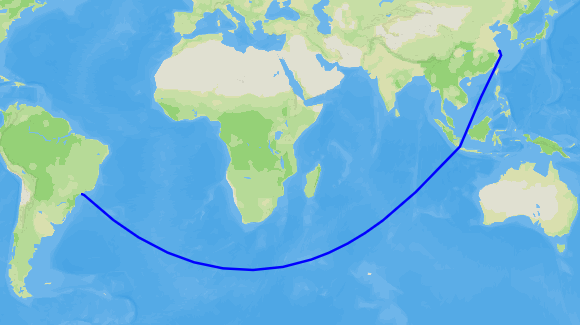
With just a few clicks the BlueRoute application can create the shortest route between two locations and predicts the 30-year average wind statistics encountered on it, as shown in Figure 1. These wind statistics are combined with the ship performance to determine the average fuel consumption and savings due to wind propulsion, as shown in Figure 2.
marin.nl/jips/blueroute

More info
ITTC Quality System Manual Recommended Procedures and Guidelines – Predicting the Power Saving of Wind Powered Ships, 7.5-02 -03-01.9

August 2026, no. 148
Interested? Contact us to discuss your options




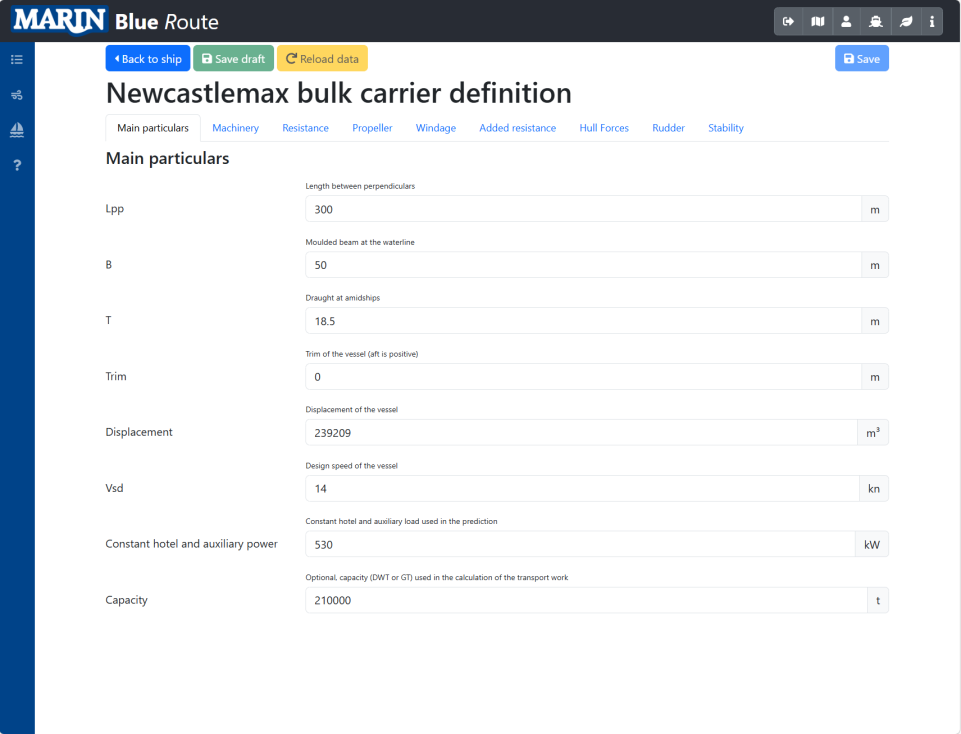
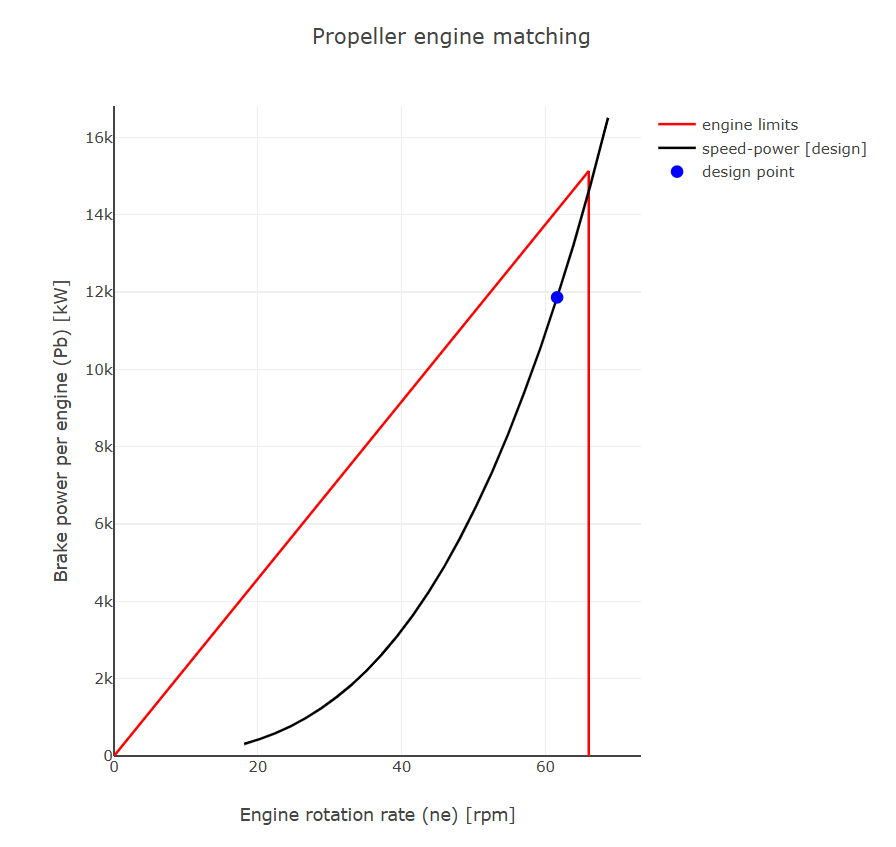
Figure 3: Example of ship definition dialogue (left) and predictive models to define the ship model, such as the propeller-engine matching (right).
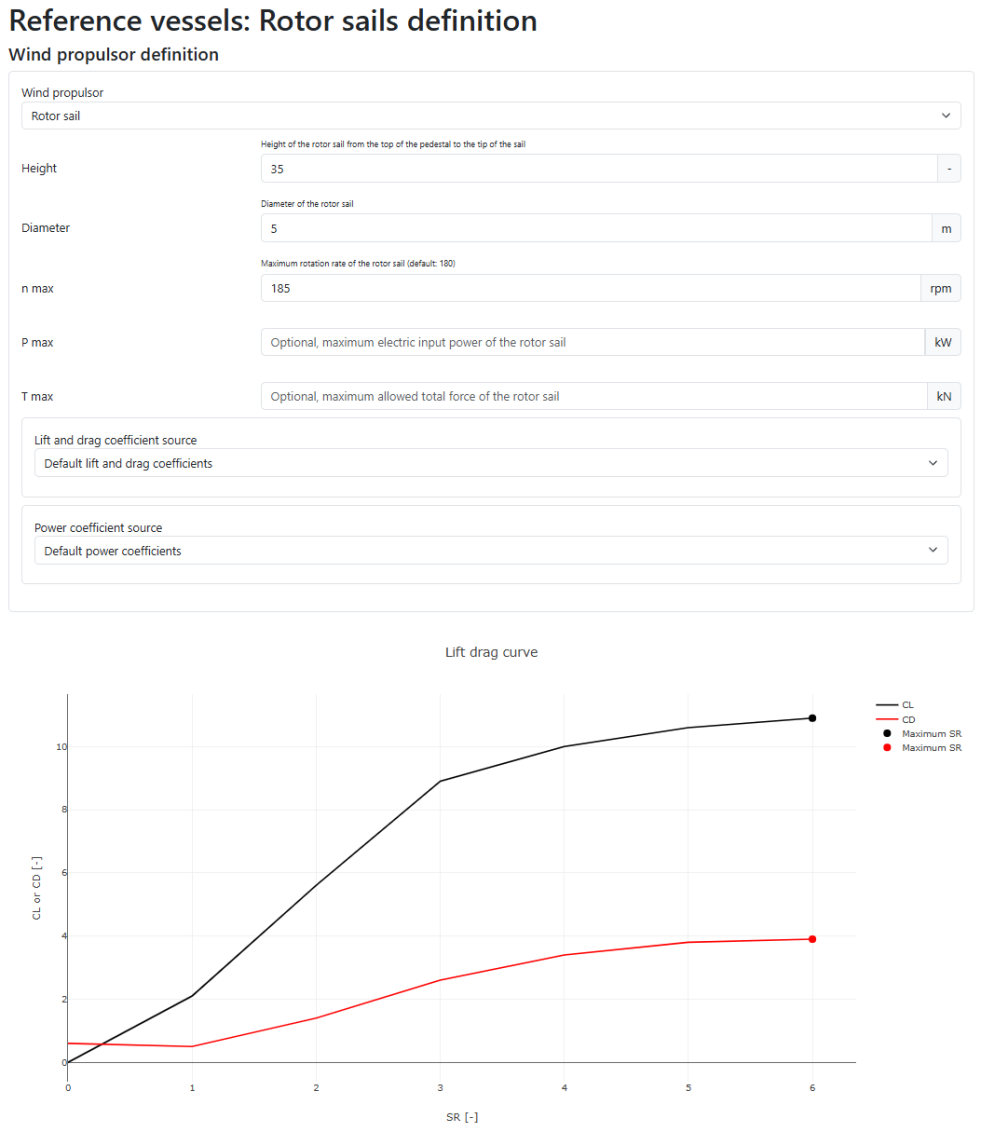
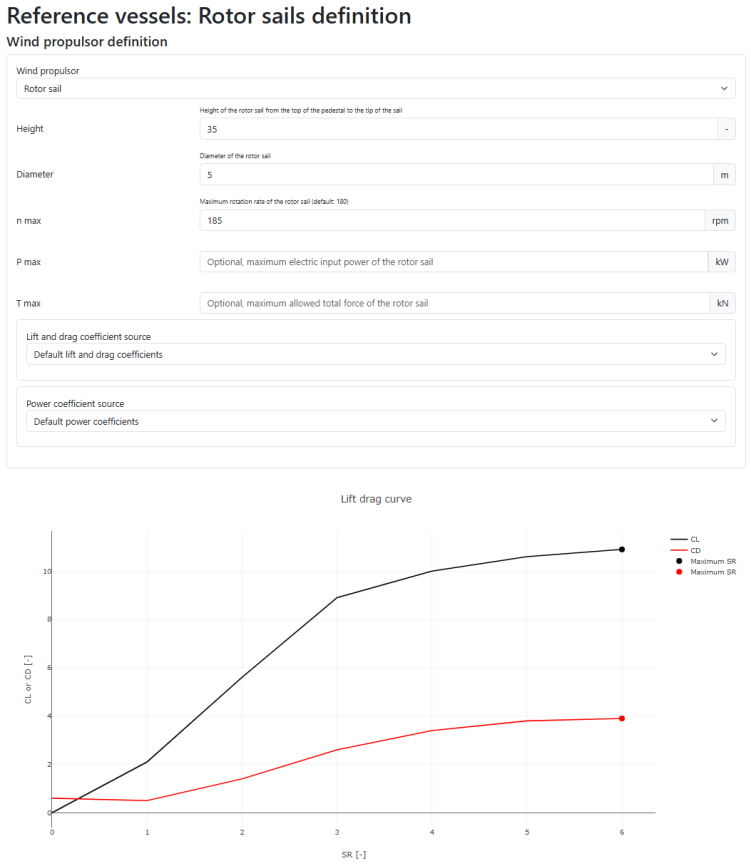
Figure 4: Example of wind propulsor definition dialogue.
BlueRoute user group
Members of the BlueRoute user group have access to the real power and can define their own ship with wind propulsion demonstrated in Figure 3 and Figure 4. The application uses predictive models to estimate unknown design parameters when needed. Examples are the speed-power curve and propeller-engine matching.
Using MARIN’s power prediction program (PPP), the optimum performance for each combination of wind speed and angle is predicted for the design. The resulting performance polars show all kinds of performance indices, such as the fuel consumption and sailing equilibrium with rudder and leeway angle. The average operational fuel consumption over a specific route can finally be evaluated for the user defined ship with wind propulsion. This can include effects of windage and added resistance in waves.
Interested in joining the BlueRoute user group? Contact us at blueroute@marin.nl
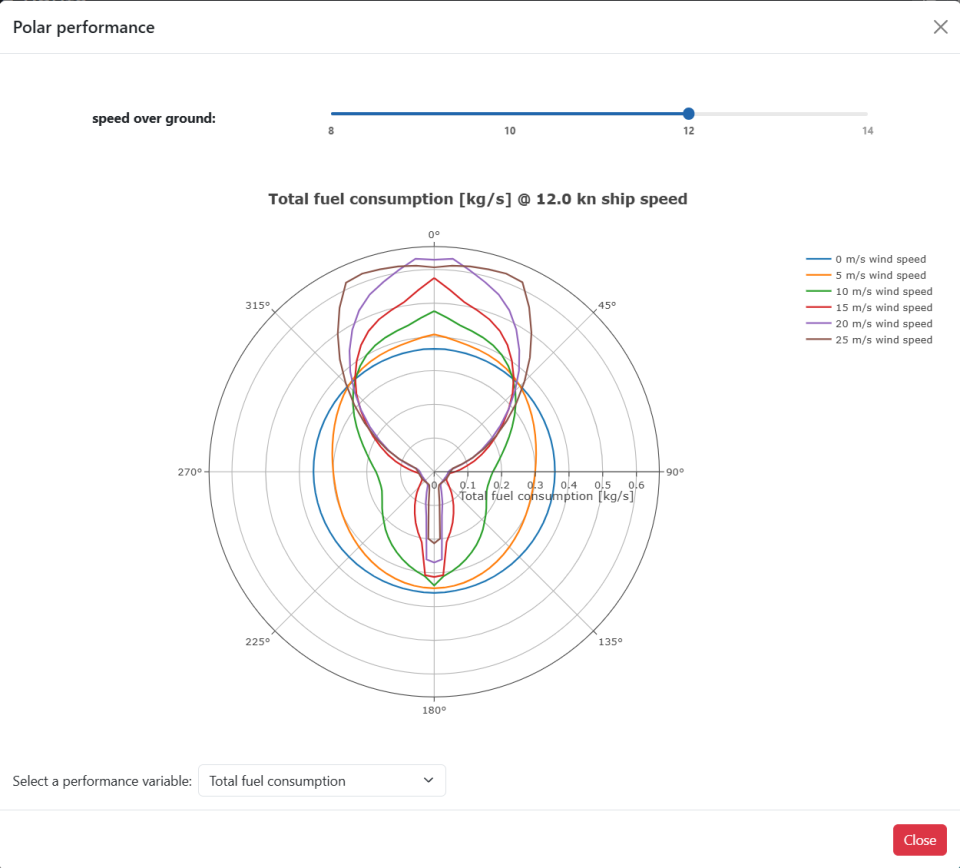
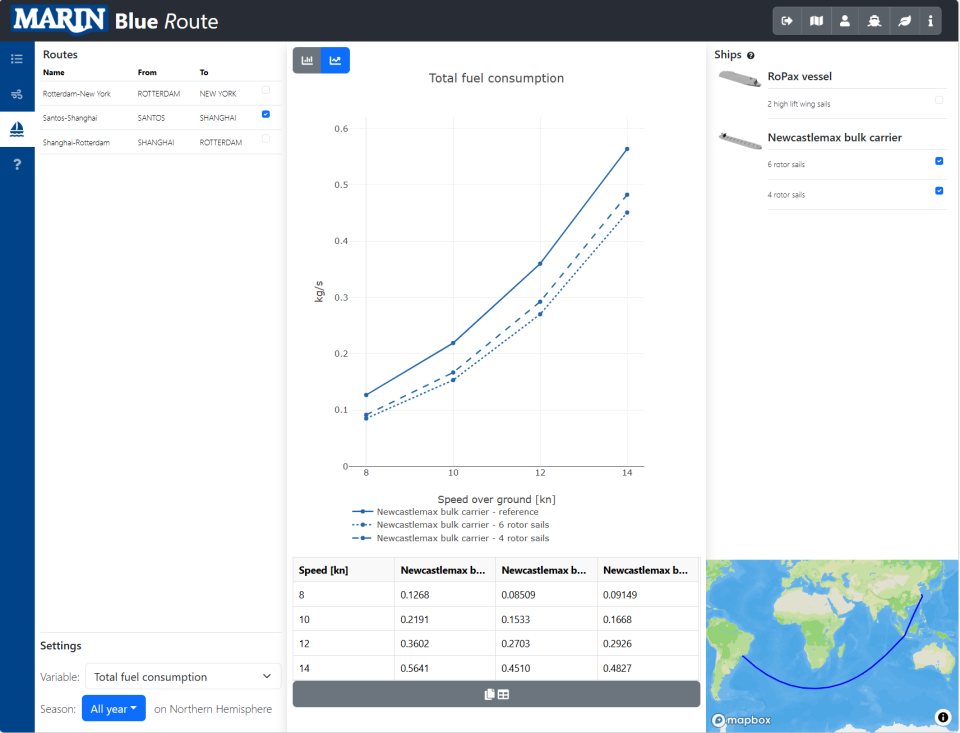
Figure 2: Ship performance polar (left) and average fuel consumption over a route with and without wind propulsion (right).
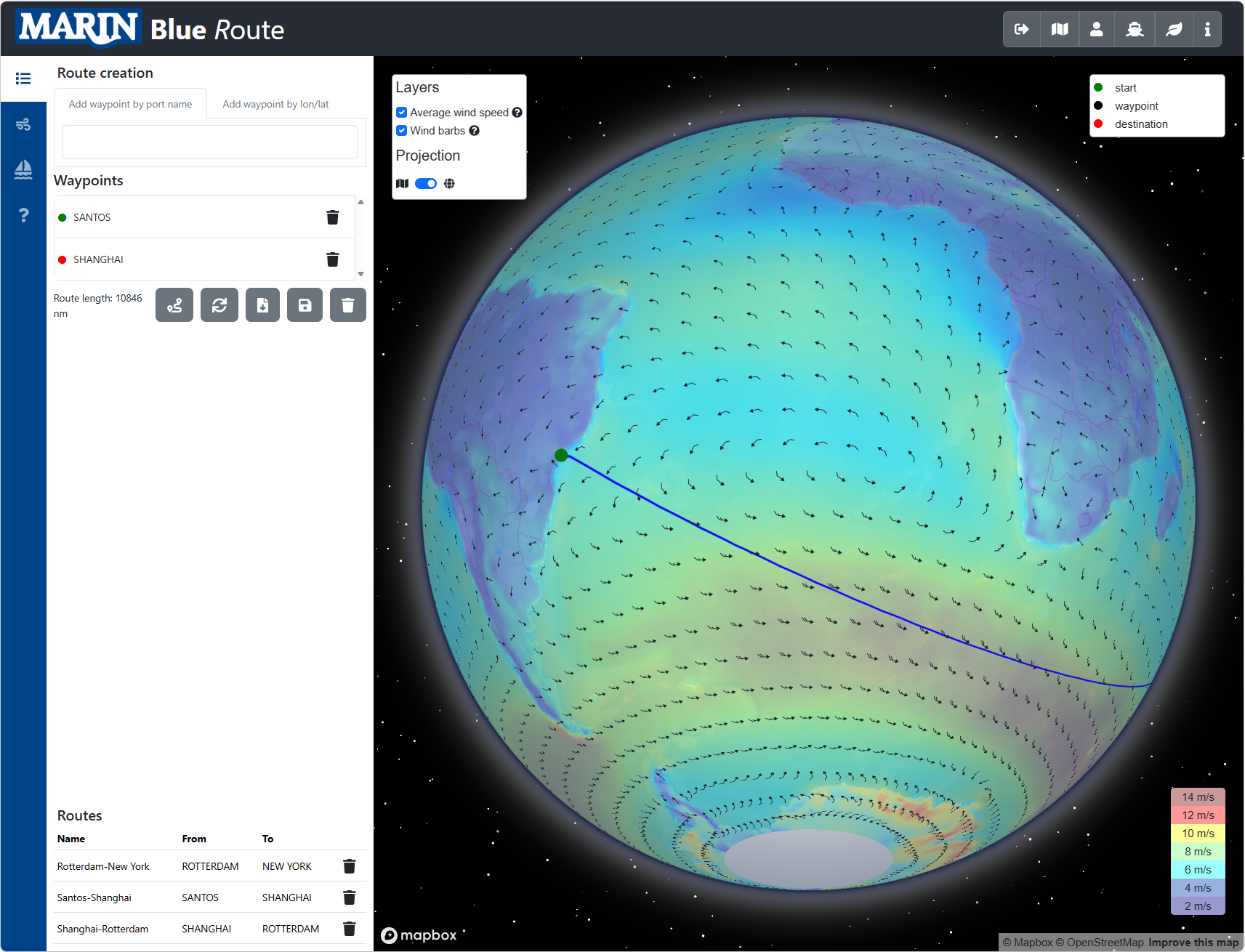
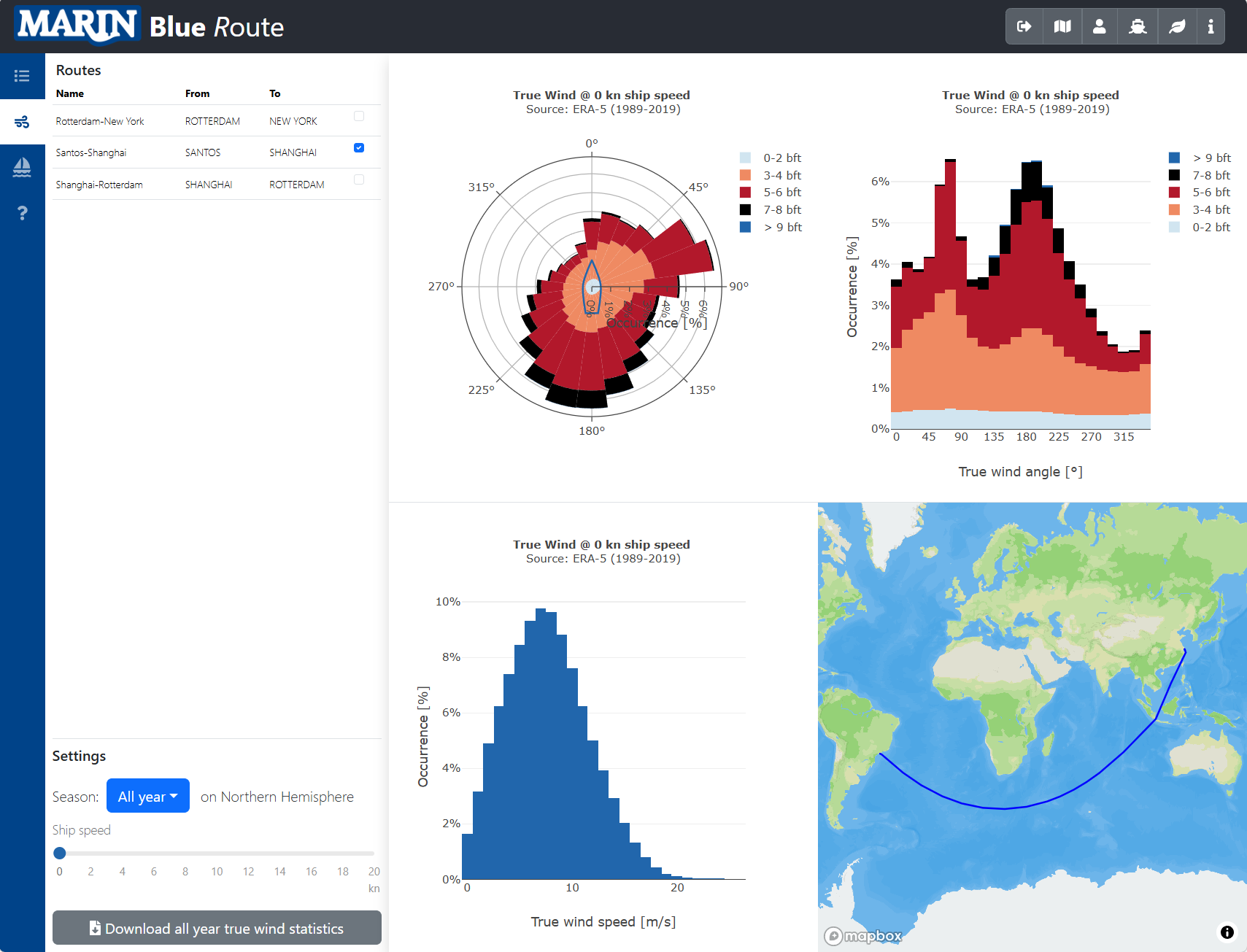
Figure 1: Shortest route with the average yearly wind statistics over 30 years.
User case - Econowind estimates fuel savings for clients
Maarten Schutte,
Proposal Engineer, Econowind
We appreciate that we can save our user-defined VentoFoil systems within the new app. Before the update, we had to define our systems for every ship separately. Another addition we love is the view in which the wind speeds and wind directions are projected on the world map. A nice future addition would be to have the option to see savings on a monthly basis instead of per season or per year. We would also like to see the range of available ship propulsion systems expanded to include options such as hydrogen-fuelled and battery-electric setups”

Create a MARIN account to stay updated

Report
Interested in the saving potential of wind propulsion for your ship? Try MARIN’s updated BlueRoute application!
The number of vessels equipped with wind propulsion is increasing. Ship designs integrating wind propulsion are moving from concept to more detailed design stages. MARIN’s BlueRoute application is following suit.


Originally the BlueRoute application (blueroute.application.marin.nl) was developed in the WiSP2 project as a tool to quickly evaluate the potential of wind propulsion for any route on the planet. The effect on fuel savings are calculated by combining the wind statistics with a basic performance model of the ship with wind propulsors.
Supported by the WiSP3 project and the BlueRoute user group, the basic way of defining the ship and wind propulsors has recently been extended. This gives enormous flexibility to the users.
Resolving 4DoF
It is now possible to make a model of the ship and wind propulsors both using limited data at an early design stage - aided by MARIN’s prediction methods - and tables with high fidelity performance data. This data is usually obtained from wind tunnel, tank tests or CFD at a later design stage. The extended models allow the application to resolve a 4DoF (thrust, side force, yawing moment and heeling moment) equilibrium of the wind propelled vessel, instead of only the 1 DoF (thrust) equilibrium. This is required for a more accurate level II and III assessment as described in [ITTC 7.5-02-03-01.9 Guideline predicting the power saving of wind powered ships].
Shortest route identified in just a few clicks
With just a few clicks the BlueRoute application can create the shortest route between two locations and predicts the 30-year average wind statistics encountered on it, as shown in Figure 1. These wind statistics are combined with the ship performance to determine the average fuel consumption and savings due to wind propulsion, as shown in Figure 2.
BlueRoute user group
Members of the BlueRoute user group have access to the real power and can define their own ship with wind propulsion demonstrated in Figure 3 and Figure 4. The application uses predictive models to estimate unknown design parameters when needed. Examples are the speed-power curve and propeller-engine matching.
Using MARIN’s power prediction program (PPP), the optimum performance for each combination of wind speed and angle is predicted for the design. The resulting performance polars show all kinds of performance indices, such as the fuel consumption and sailing equilibrium with rudder and leeway angle. The average operational fuel consumption over a specific route can finally be evaluated for the user defined ship with wind propulsion. This can include effects of windage and added resistance in waves.
Interested in joining the BlueRoute user group? Contact us at blueroute@marin.nl
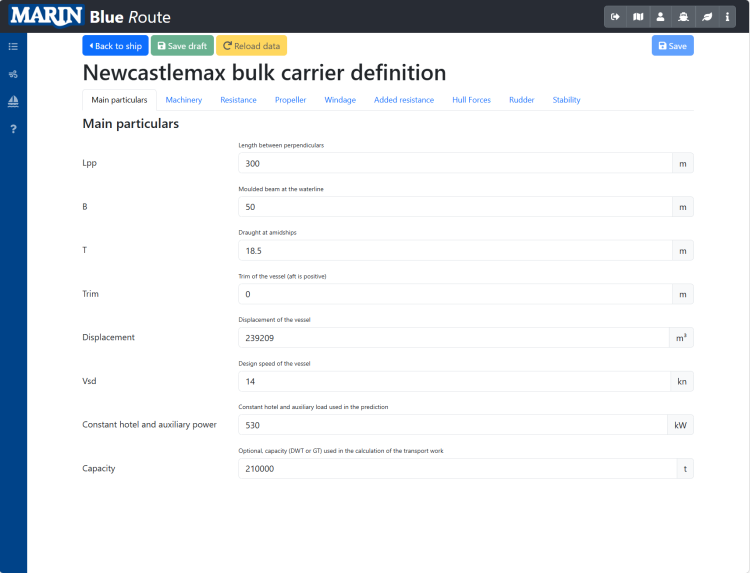
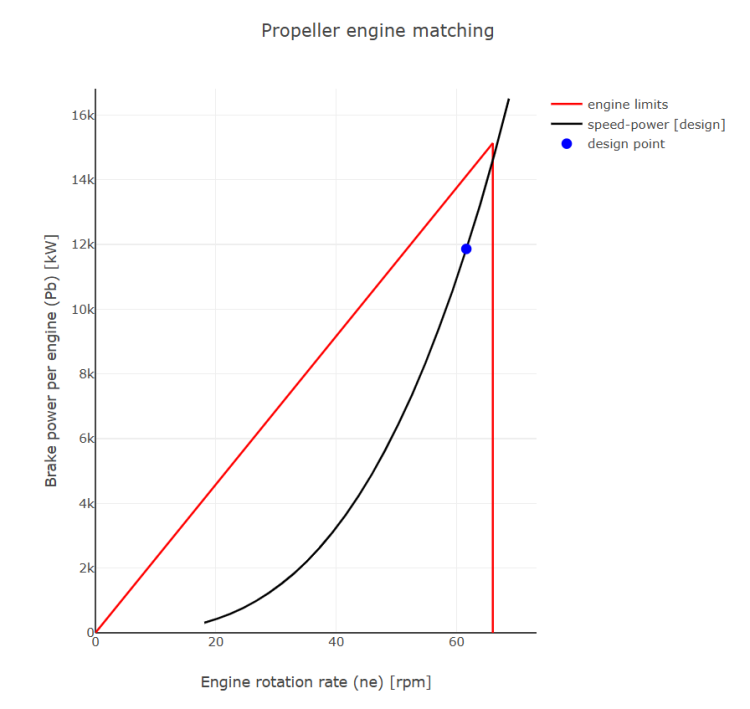
Figure 3: Example of ship definition dialogue (above) and predictive models to define the ship model, such as the propeller-engine matching (below).
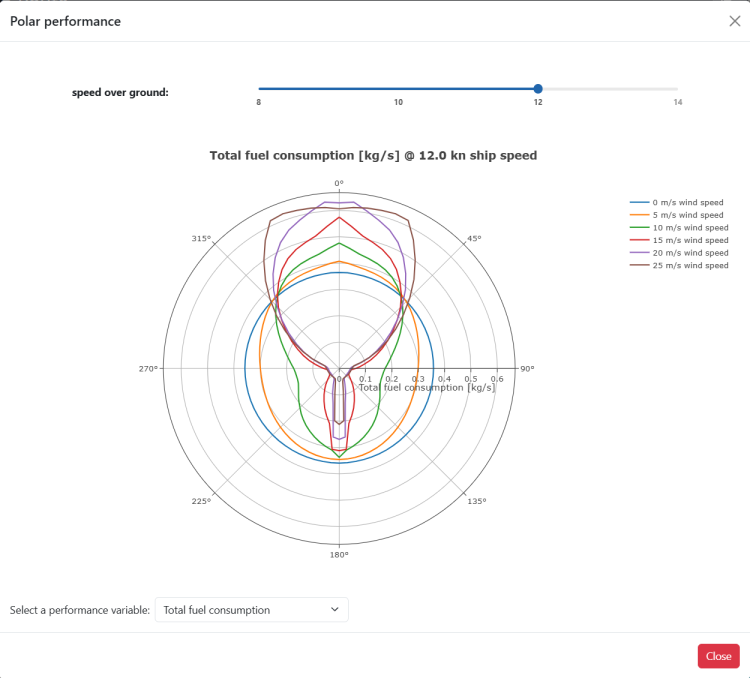
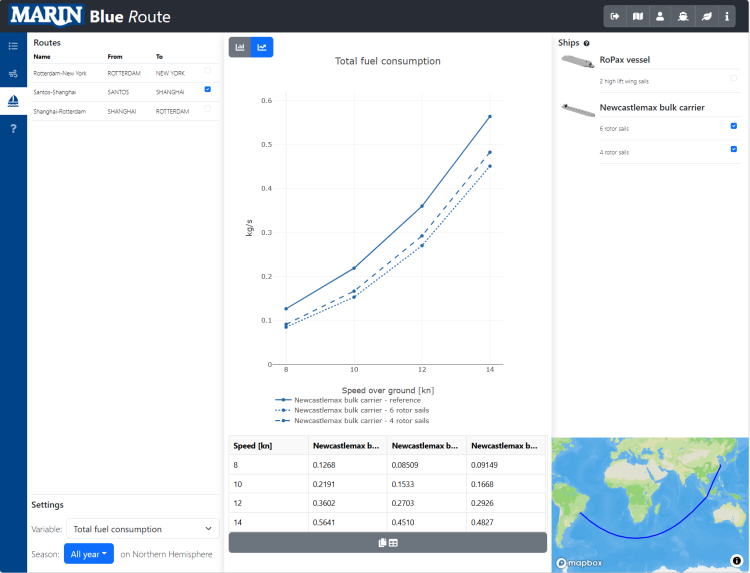
Figure 2: Ship performance polar (above) and average fuel consumption over a route with and without wind propulsion (below).
marin.nl/jips/blueroute
Figure 4: Example of wind propulsor definition dialogue.
User case - Econowind estimates fuel savings for clients
Maarten Schutte,
Proposal Engineer, Econowind
We appreciate that we can save our user-defined VentoFoil systems within the new app. Before the update, we had to define our systems for every ship separately. Another addition we love is the view in which the wind speeds and wind directions are projected on the world map. A nice future addition would be to have the option to see savings on a monthly basis instead of per season or per year. We would also like to see the range of available ship propulsion systems expanded to include options such as hydrogen-fuelled and battery-electric setups”
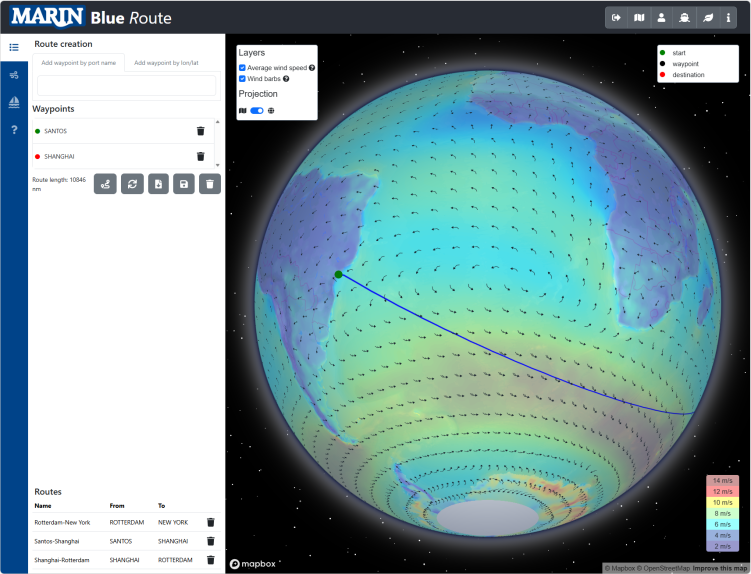
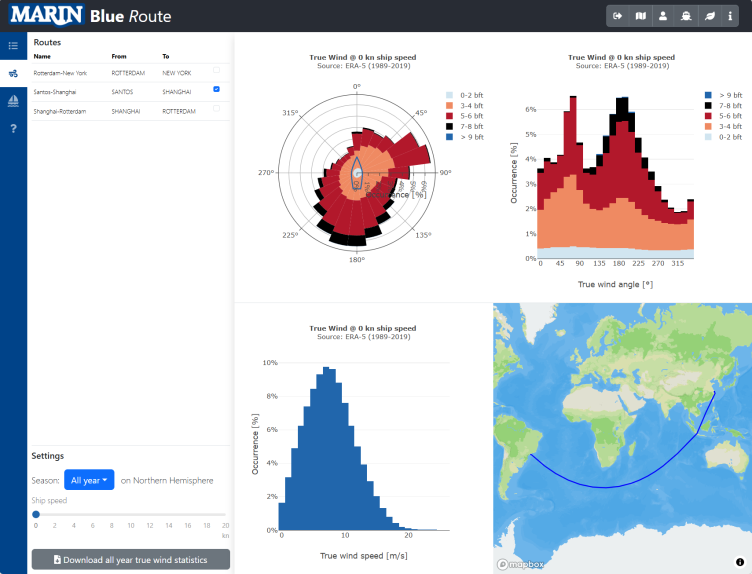
Figure 1: Shortest route with the average yearly wind statistics over 30 years.
August 2026, no. 148
ITTC Quality System Manual Recommended Procedures and Guidelines – Predicting the Power Saving of Wind Powered Ships, 7.5-02 -03-01.9
More info
The number of vessels equipped with wind propulsion is increasing. Ship designs integrating wind propulsion are moving from concept to more detailed design stages. MARIN’s BlueRoute application is following suit.
Interested in the saving potential of wind propulsion for your ship? Try MARIN’s updated BlueRoute application!
Interested? Contact us to discuss your options
Create a MARIN account to stay updated

Report