More info
Seven Oceans Simulator centre

May 2026, no. 147
Interested? Contact us to discuss your options


In the Carbon Collectors project, XR was used to visualise the operation from the deck perspective. The Large Motion Simulator (LMS) was also used to simulate the motions on deck in different environmental conditions.
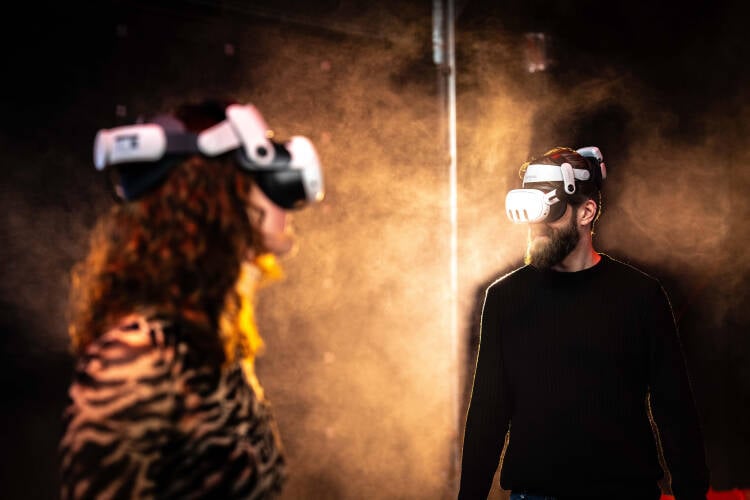
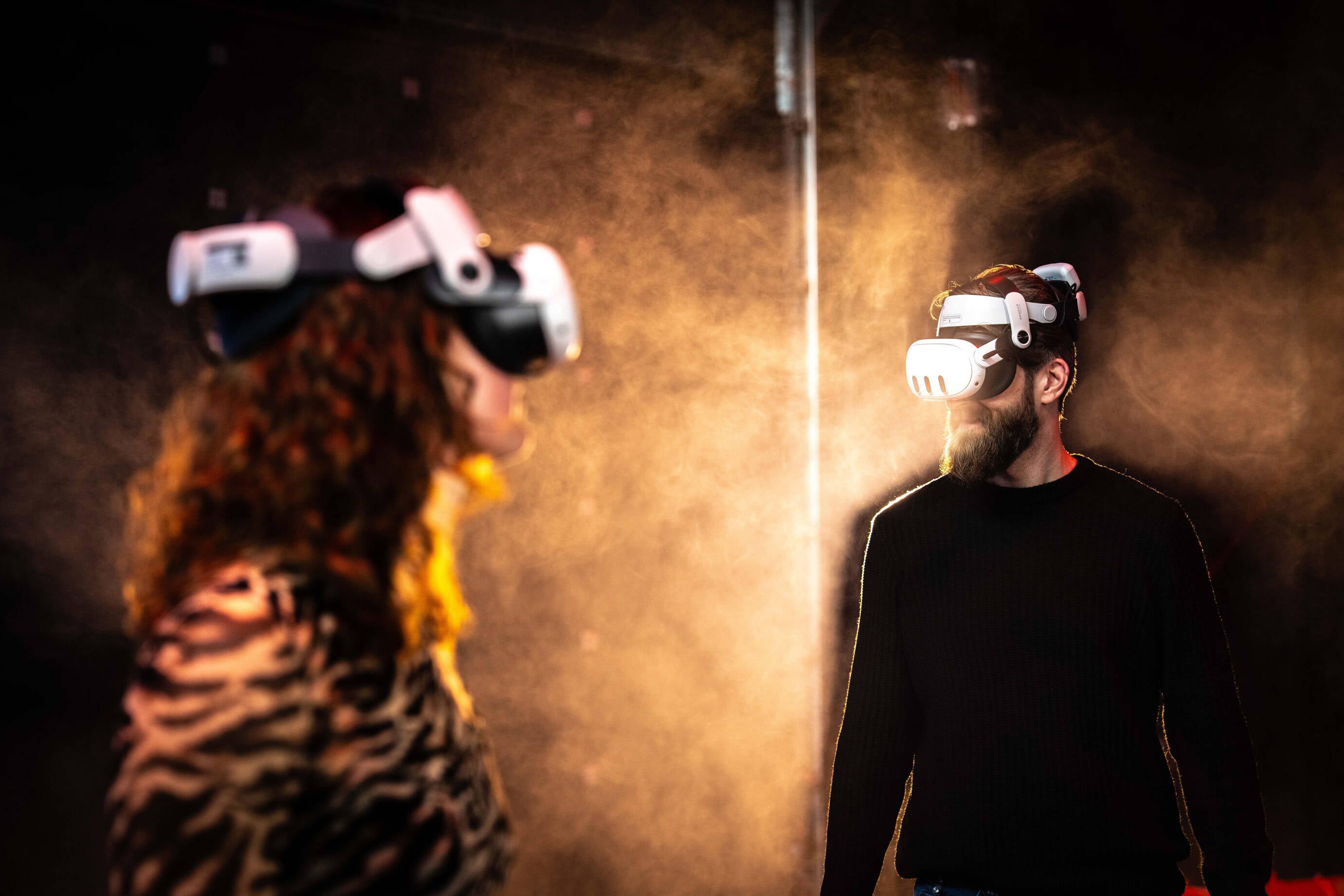
The Maritime eXperience Lab, combining immersive XR, motion platforms and robotic systems within a real-time hydrodynamic simulation framework to provide the necessary flexibility to explore novel concepts in a safe environment.


Create a MARIN account to stay updated

Report
Expanding simulations with XR
Maritime concepts increasingly rely on complex operations performed in challenging environmental conditions. Yet critical decisions about both the design of vessels and the definition of operational procedures are often made long before crews can realistically experience how a vessel will behave at sea.
Reducing uncertainty in early design stages
The value of integrated hybrid simulation lies in reducing uncertainty at an early stage. XR helps answering practical questions that arise during concept development, allowing crew and end users to provide feedback earlier in the design cycle. The outcome is not simply a binary feasibility judgement, but a clearly defined operational envelope supported by measurable margins and targeted design recommendations. In some cases, this confirms that a concept is robust. In others, it identifies where configuration adjustments, equipment selection or procedural changes are needed to maintain safety and performance, while limiting downtime and protecting overall project viability.
By integrating immersive XR environments into an established hydrodynamic simulation framework, demanding operations can be evaluated before fabrication begins. For organisations developing new vessel concepts or operational procedures, it provides an opportunity to validate assumptions, quantify limits and strengthen investment confidence before committing to irreversible design decisions.
One example is the Carbon Collectors project (see previous article), where XR was used to visualise proposed concepts and enabled engineers and operators to evaluate operational limits from the deck perspective at an early stage. Criteria for judging operations can include metrics like the Motion Interrupt Index (MII) or crew toppling thresholds. These measures help determine whether tasks can be safely executed under specific environmental conditions and crew loads. Insights from these simulations can directly influence design decisions long before construction begins. By identifying where margins are comfortable, designers can adjust configurations, select alternative equipment or redefine operational procedures before construction decisions are finalised.
Bridge simulators, motion platforms and immersive XR environments can be coupled in a single real-time scenario. Captains operate the vessel from the bridge simulator, while other participants experience deck operations within the virtual environment. Because all systems are synchronised with the underlying vessel and wave models, motions, forces and environmental conditions remain physically consistent across the simulation.
Increasing use of XR
XR is increasingly used within research and innovation projects exploring new maritime technologies and operational concepts. By combining immersive environments with hydrodynamic simulations, stakeholders can experience complex operations in a safe and controlled setting while still maintaining physical realism.
Supporting innovation projects
Many innovative vessel concepts depend on assumptions about operational limits. Can a crew safely connect to offshore infrastructure in rough conditions? Does a new bridge layout support effective decision-making during high workload manoeuvres? How do communication and coordination between the bridge and deck hold up when weather conditions deteriorate?
These questions often arise before construction begins, yet they are difficult to answer using numerical analysis alone. The MX Lab addresses this challenge by placing human operators inside simulations that are directly linked to the same hydrodynamic models used in MARIN’s manoeuvring studies.
The recent development extends this established framework by integrating immersive XR environments directly into the same simulation backbone. These immersive environments are synchronised with the underlying manoeuvring and wave models: motions, forces and environmental effects experienced by users are therefore consistent with the physics governing the vessel.
This integration makes it possible to position crew not only on the bridge, but also virtually on any other part of the vessel within the same real-time scenario from anywhere in the Seven Oceans Simulation centre. This allows for example, scenarios where bridge and deck interact as they would in reality, with realistic coordination between roles – particularly important when team communication is a critical aspect.
By combining hydrodynamic fidelity, real-time manoeuvring and immersive interaction in a single framework, the facility enables evaluation of operational concepts that extend well beyond conventional ship handling studies.
To reduce this gap, MARIN’s Maritime eXperience Lab (MX Lab) combines hydrodynamic simulation with immersive eXtended Reality (XR) technologies, allowing engineers and operators to evaluate operational concepts before construction begins.
Extending simulation beyond the bridge
At MARIN’s Seven Oceans Simulator centre, real-time manoeuvring simulations have long been used to evaluate vessel handling under site-specific environmental conditions. Experienced captains operate full-mission bridge simulators, while instructors and engineers evaluate controllability, power margins, and interactions with surrounding infrastructure.


May 2026, no. 147
Seven Oceans Simulator centre
More info
Reducing uncertainty in early design stages
The value of integrated hybrid simulation lies in reducing uncertainty at an early stage. XR helps answering practical questions that arise during concept development, allowing crew and end users to provide feedback earlier in the design cycle. The outcome is not simply a binary feasibility judgement, but a clearly defined operational envelope supported by measurable margins and targeted design recommendations. In some cases, this confirms that a concept is robust. In others, it identifies where configuration adjustments, equipment selection or procedural changes are needed to maintain safety and performance, while limiting downtime and protecting overall project viability.
By integrating immersive XR environments into an established hydrodynamic simulation framework, demanding operations can be evaluated before fabrication begins. For organisations developing new vessel concepts or operational procedures, it provides an opportunity to validate assumptions, quantify limits and strengthen investment confidence before committing to irreversible design decisions.
In the Carbon Collectors project, XR was used to visualise the operation from the deck perspective. The Large Motion Simulator (LMS) was also used to simulate the motions on deck in different environmental conditions.
One example is the Carbon Collectors project (see previous article), where XR was used to visualise proposed concepts and enabled engineers and operators to evaluate operational limits from the deck perspective at an early stage. Criteria for judging operations can include metrics like the Motion Interrupt Index (MII) or crew toppling thresholds. These measures help determine whether tasks can be safely executed under specific environmental conditions and crew loads. Insights from these simulations can directly influence design decisions long before construction begins. By identifying where margins are comfortable, designers can adjust configurations, select alternative equipment or redefine operational procedures before construction decisions are finalised.
Bridge simulators, motion platforms and immersive XR environments can be coupled in a single real-time scenario. Captains operate the vessel from the bridge simulator, while other participants experience deck operations within the virtual environment. Because all systems are synchronised with the underlying vessel and wave models, motions, forces and environmental conditions remain physically consistent across the simulation.
Increasing use of XR
XR is increasingly used within research and innovation projects exploring new maritime technologies and operational concepts. By combining immersive environments with hydrodynamic simulations, stakeholders can experience complex operations in a safe and controlled setting while still maintaining physical realism.
Supporting innovation projects
Many innovative vessel concepts depend on assumptions about operational limits. Can a crew safely connect to offshore infrastructure in rough conditions? Does a new bridge layout support effective decision-making during high workload manoeuvres? How do communication and coordination between the bridge and deck hold up when weather conditions deteriorate?
These questions often arise before construction begins, yet they are difficult to answer using numerical analysis alone. The MX Lab addresses this challenge by placing human operators inside simulations that are directly linked to the same hydrodynamic models used in MARIN’s manoeuvring studies.
The Maritime eXperience Lab, combining immersive XR, motion platforms and robotic systems within a real-time hydrodynamic simulation framework to provide the necessary flexibility to explore novel concepts in a safe environment.
The recent development extends this established framework by integrating immersive XR environments directly into the same simulation backbone. These immersive environments are synchronised with the underlying manoeuvring and wave models: motions, forces and environmental effects experienced by users are therefore consistent with the physics governing the vessel.
This integration makes it possible to position crew not only on the bridge, but also virtually on any other part of the vessel within the same real-time scenario from anywhere in the Seven Oceans Simulation centre. This allows for example, scenarios where bridge and deck interact as they would in reality, with realistic coordination between roles – particularly important when team communication is a critical aspect.
By combining hydrodynamic fidelity, real-time manoeuvring and immersive interaction in a single framework, the facility enables evaluation of operational concepts that extend well beyond conventional ship handling studies.
To reduce this gap, MARIN’s Maritime eXperience Lab (MX Lab) combines hydrodynamic simulation with immersive eXtended Reality (XR) technologies, allowing engineers and operators to evaluate operational concepts before construction begins.
Extending simulation beyond the bridge
At MARIN’s Seven Oceans Simulator centre, real-time manoeuvring simulations have long been used to evaluate vessel handling under site-specific environmental conditions. Experienced captains operate full-mission bridge simulators, while instructors and engineers evaluate controllability, power margins, and interactions with surrounding infrastructure.
Maritime concepts increasingly rely on complex operations performed in challenging environmental conditions. Yet critical decisions about both the design of vessels and the definition of operational procedures are often made long before crews can realistically experience how a vessel will behave at sea.
Expanding simulations with XR
Interested? Contact us to discuss your options
Create a MARIN account to stay updated

Report