Dr. Jessica Heeman
Senior Project Manager,
Programme Manager MOMiT, MARIN
“MOMiT is really focused on people — on how humans will collaborate with advanced technology in a hightech environment to operate effectively.”

“This study is a clear example of how we help clients explore, test and refine tomorrow’s operations today.”
Immersive A/B testing: a method for future fleet design
So, what is the answer to the research question: How can we validate and test revolutionary OMCs?The study shows that immersive A/B testing is not only feasible, but also highly effective. By letting operators experience future concepts in realistic, high-fidelity simulations, navies can explore design questions early on. This reduces risk when exploring revolutionary OMCs, while allowing navies to be more innovative.
As the naval world moves towards hybrid fleets of collaborating crewed and uncrewed platforms, MARIN’s Seven Oceans Simulator centre offers a powerful testbed for shaping the OMCs of tomorrow, before they ever touch the water. Within MOMiT, we will develop more methods to design future OMCs.
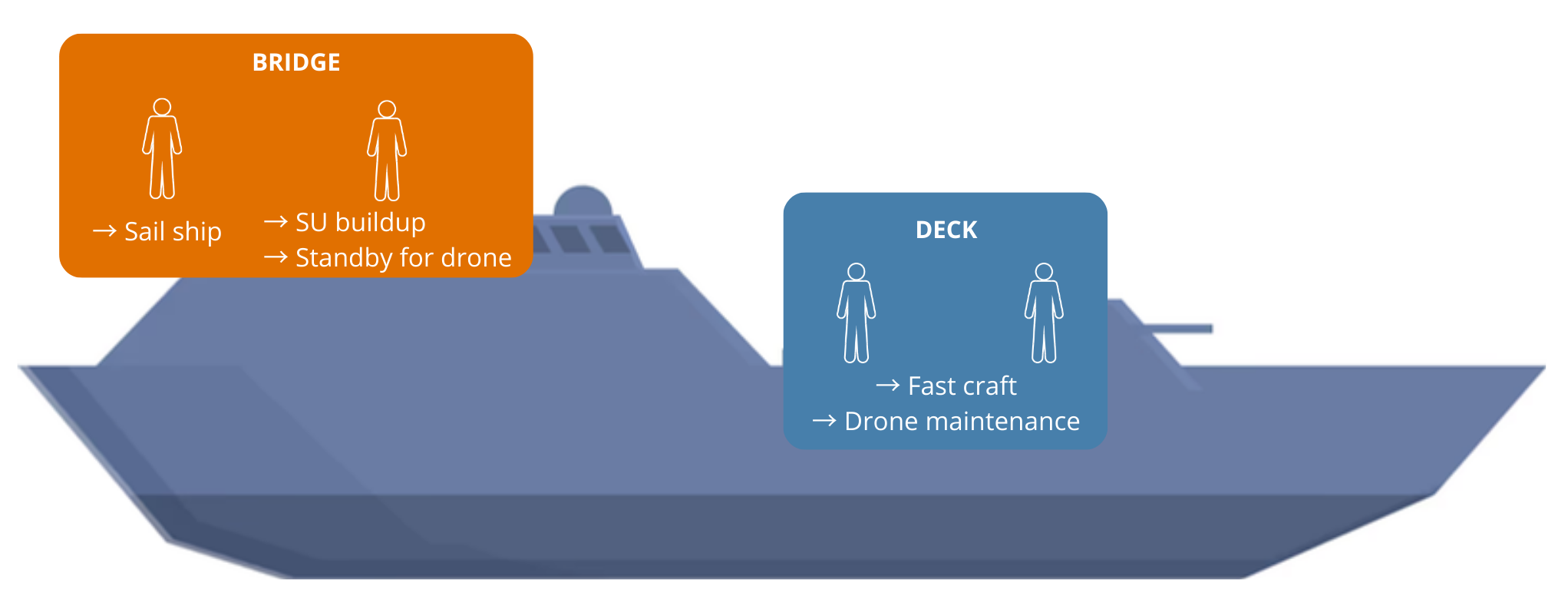
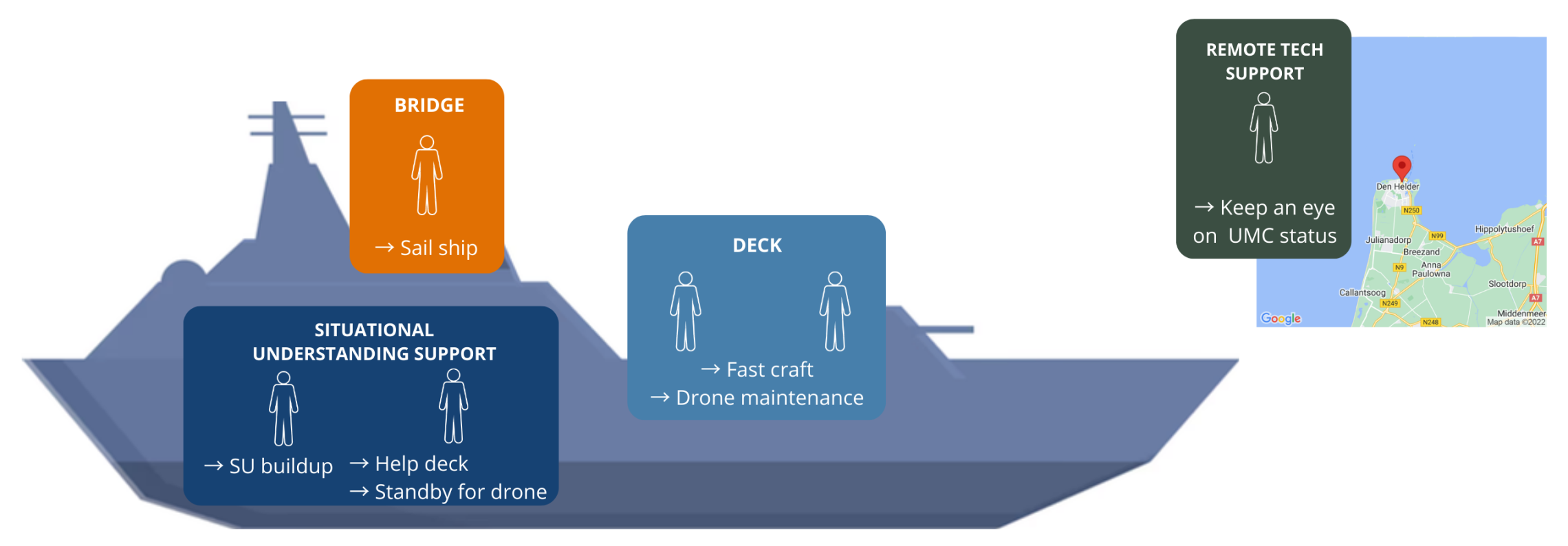
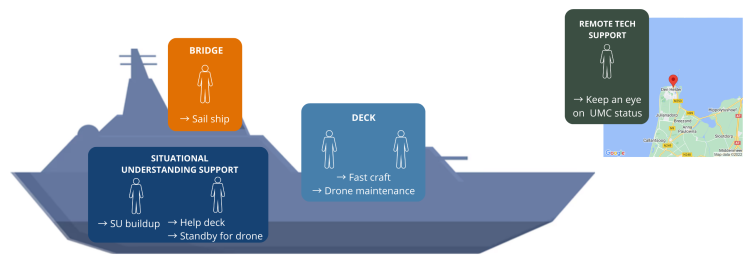
Model of OMC A showing the operators in each location. Within this model the USVs are represented by UMCs (Uncrewed Missile Carriers).
May 2026, no. 147
Create a MARIN account to stay updated

Report
Guus Koppes
Engineer Officer, Royal Netherlands Navy
“It’s fantastic to be part of this experiment — to explore what the future might look like, and to see how a simple test can reveal so much without requiring extensive expertise.”
Interested? Contact us to discuss your options
Measuring performance from different angles
The study combined quantitative data (eye tracking, skin conductance, heart rate variability and communication patterns) with qualitative insights from observation and structured debriefings using SWOT analyses.
This mixed methods approach provided a detailed view into workload, situational awareness, decision making, teamwork and performance under realistic operational pressure.
Although both concepts were workable, the preliminary results point strongly towards OMC A. The distributed setup, supported by specialised workstations and active remote technical support contributed to more effective and resilient operations. Participants experienced a lower workload (physiological and self-reported), smoother coordination across roles and better mission performance.
Development should be based on the SWOT analyses and observations. It should also test OMCs in various scenarios with different events.
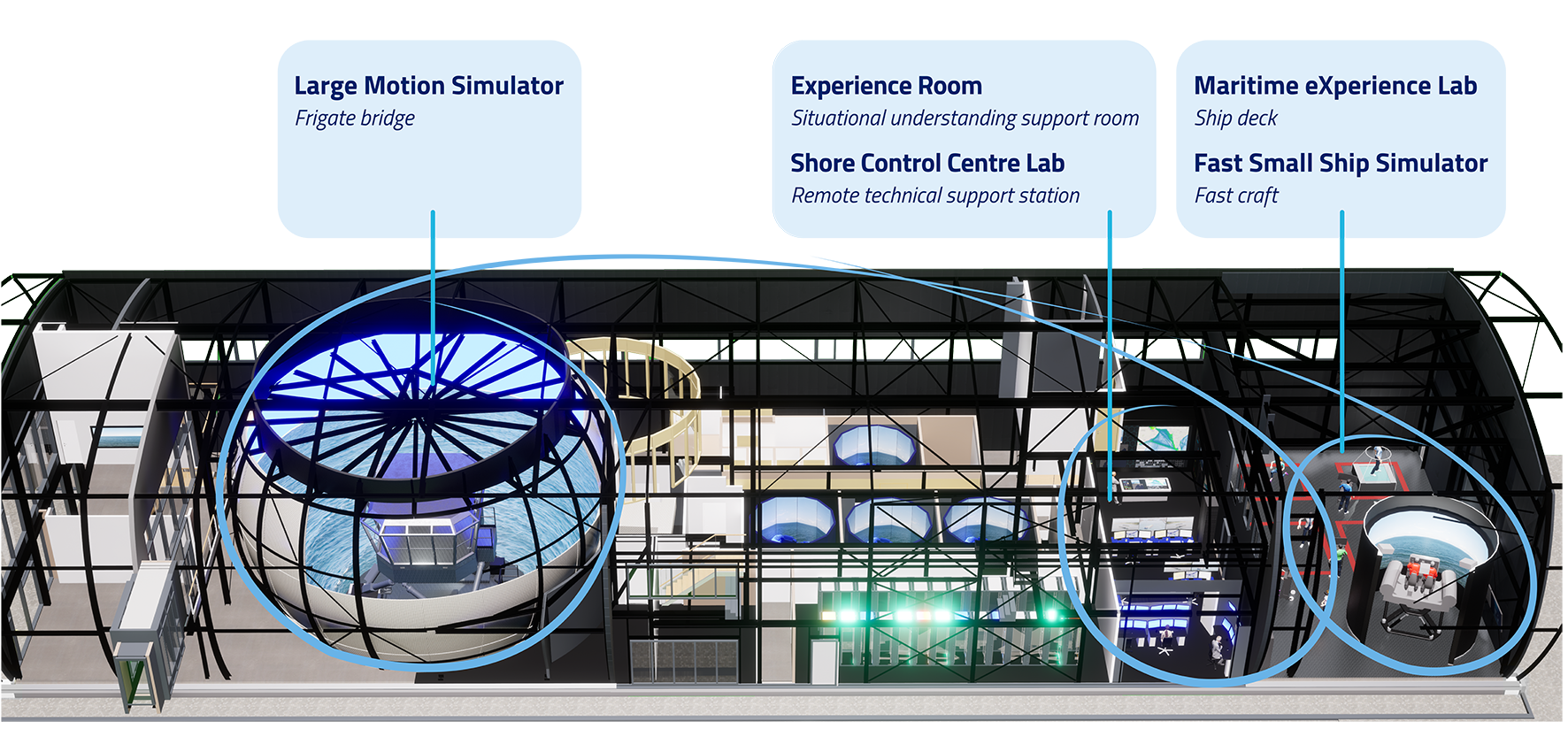
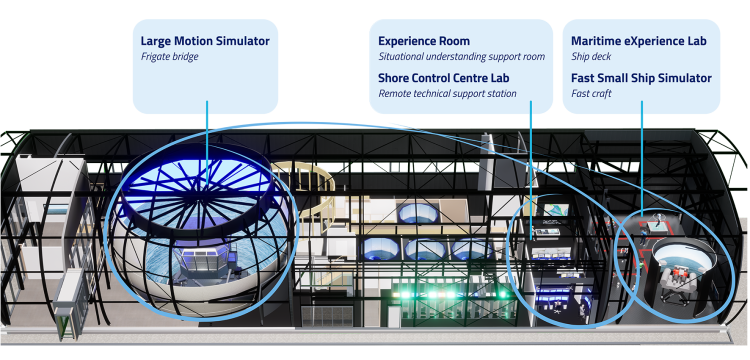
To recreate the complexity of modern naval operations, MARIN connected multiple simulators and VR systems into one seamless environment:
a bridge simulator for ship handling (Large Motion Simulator)
a VR CAVE for a situational awareness support room on the ship (Experience Room)
a remote technical support station for managing USVs (Shore Control Centre Lab)
a motion based 6DOF simulator for the fast craft (Fast Small Ship Simulator)
a ship deck (Maritime eXperience Lab)
a drone-flying environment (VR)
Operators could walk, talk, gesture, and make decisions as they would at sea. Being at different locations they were connected with headsets.
A future frigate, four USVs, and two ways of working
Over two experiment days, 12 naval professionals stepped into a high-fidelity, fully integrated simulation environment. Their mission: to operate a future frigate travelling across the Mediterranean, accompanied by four autonomous uncrewed surface vessels (USVs). On deck a fast craft and drones are available. Around them, unexpected events happen: first a suspicious surface vessel contact, then propulsion trouble on one of the USVs.
What changed between simulator runs was not the scenario, but how the crew was organised. Two OMCs were put to the test: a lean, distributed, specialised and remotely supported OMC A and an even leaner and co-located OMC B.
OMC A: Distributed, Specialised and Supported
For this Operational Management Concept six operators worked from four different locations within the simulator centre:
one on the frigate bridge
two supporting situational awareness from a dedicated room
two on the deck, maintaining drones and operating the fast craft and drones
one analyst ashore providing technical support
OMC B: lean and co-located
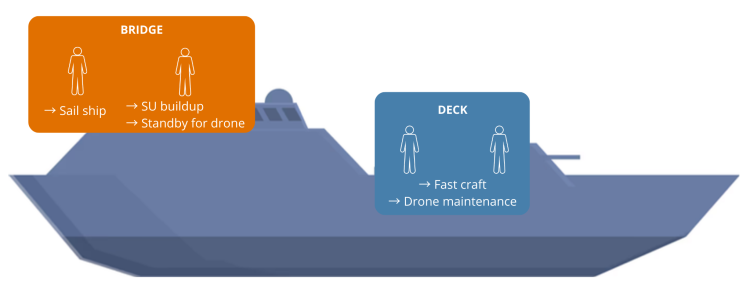
For this concept four operators worked from only two locations: two on the bridge and two on deck.
This transition is an ambitious shift, one that demands not only new technology, but new ways for humans and technology to work together. By bringing tomorrow’s naval operations into today’s simulators, MARIN is exploring a key question: How can we develop revolutionary Operational Management Concepts?
An Operational Management Concept (OMC) consists of operational functions and tasks that are conducted by humans, machines or both, at specific physical locations to achieve the objectives of an operation.
The Royal Netherlands Navy envisions a future in which crewed and uncrewed systems operate side by side as one cohesive fleet. To achieve this transition, the Navy, MARIN and TNO have teamed up in the Militairy-Maritime Operational Management in Transition (MOMiT) project.
Crewed–Uncrewed Teaming: testing tomorrow’s naval operations today
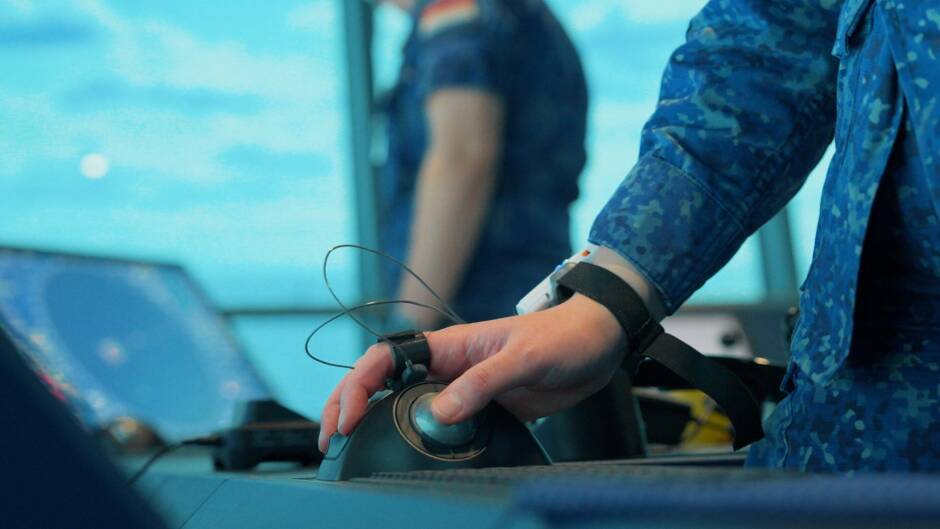
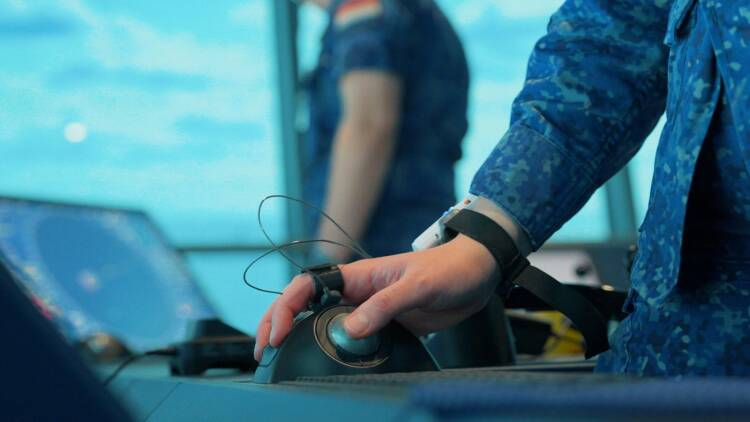
Skin conductance measurement instrument on the finger of the bridge officer of the frigate.
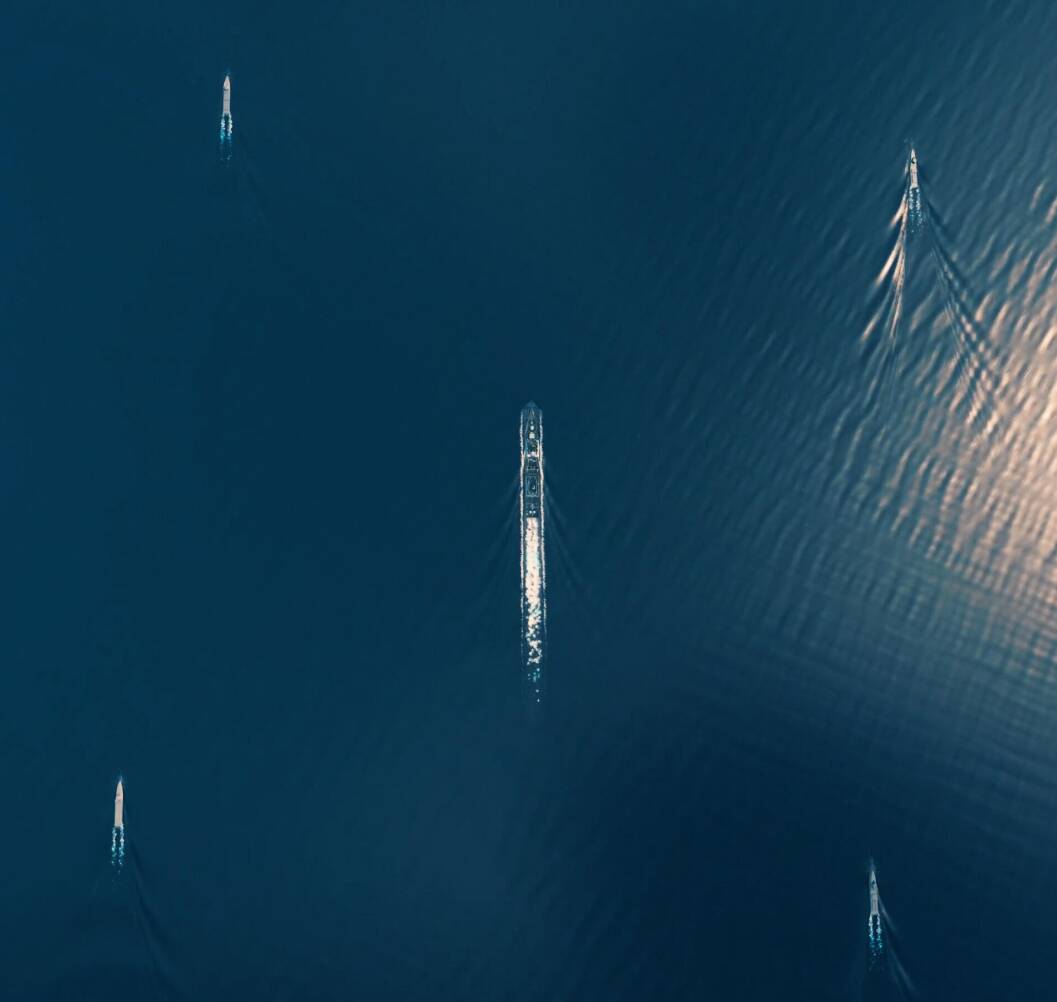
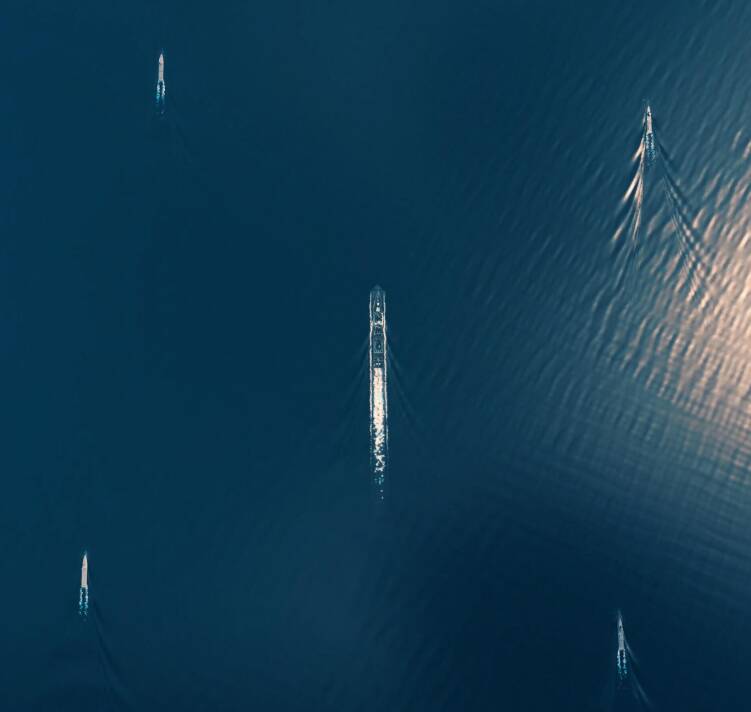
Aerial perspective on the future frigate accompanied by the four autonomous USVs.
Model of OMC B showing the operators in two locations.
Model of OMC A showing the operators in each location.



“This study is a clear example of how we help clients explore, test and refine tomorrow’s operations today.”
May 2026, no. 147
Dr. Jessica Heeman
Senior Project Manager,
Programme Manager MOMiT, MARIN
“MOMiT is really focused on people — on how humans will collaborate with advanced technology in a hightech environment to operate effectively.”
Immersive A/B testing: a method for future fleet design
So, what is the answer to the research question: How can we validate and test revolutionary OMCs?The study shows that immersive A/B testing is not only feasible, but also highly effective. By letting operators experience future concepts in realistic, high-fidelity simulations, navies can explore design questions early on. This reduces risk when exploring revolutionary OMCs, while allowing navies to be more innovative.
As the naval world moves towards hybrid fleets of collaborating crewed and uncrewed platforms, MARIN’s Seven Oceans Simulator centre offers a powerful testbed for shaping the OMCs of tomorrow, before they ever touch the water. Within MOMiT, we will develop more methods to design future OMCs.
Model of OMC A showing the operators in each location. Within this model the USVs are represented by UMCs (Uncrewed Missile Carriers).
Skin conductance measurement instrument on the finger of the bridge officer of the frigate.
Aerial perspective on the future frigate accompanied by the four autonomous USVs.
A future frigate, four USVs, and two ways of working
Over two experiment days, 12 naval professionals stepped into a high-fidelity, fully integrated simulation environment. Their mission: to operate a future frigate travelling across the Mediterranean, accompanied by four autonomous uncrewed surface vessels (USVs). On deck a fast craft and drones are available. Around them, unexpected events happen: first a suspicious surface vessel contact, then propulsion trouble on one of the USVs.
What changed between simulator runs was not the scenario, but how the crew was organised. Two OMCs were put to the test: a lean, distributed, specialised and remotely supported OMC A and an even leaner and co-located OMC B.
OMC A: Distributed, Specialised and Supported
For this Operational Management Concept six operators worked from four different locations within the simulator centre:
one on the frigate bridge
two supporting situational awareness from a dedicated room
two on the deck, maintaining drones and operating the fast craft and drones
one analyst ashore providing technical support
OMC B: lean and co-located
For this concept four operators worked from only two locations: two on the bridge and two on deck.
Model of OMC B showing the operators in two locations.
Guus Koppes
Engineer Officer, Royal Netherlands Navy
“It’s fantastic to be part of this experiment — to explore what the future might look like, and to see how a simple test can reveal so much without requiring extensive expertise.”
Model of OMC A showing the operators in each location.
To recreate the complexity of modern naval operations, MARIN connected multiple simulators and VR systems into one seamless environment:
a bridge simulator for ship handling (Large Motion Simulator)
a VR CAVE for a situational awareness support room on the ship (Experience Room)
a remote technical support station for managing USVs (Shore Control Centre Lab)
a motion based 6DOF simulator for the fast craft (Fast Small Ship Simulator)
a ship deck (Maritime eXperience Lab)
a drone-flying environment (VR)
Operators could walk, talk, gesture, and make decisions as they would at sea. Being at different locations they were connected with headsets.
Measuring performance from different angles
The study combined quantitative data (eye tracking, skin conductance, heart rate variability and communication patterns) with qualitative insights from observation and structured debriefings using SWOT analyses.
This mixed methods approach provided a detailed view into workload, situational awareness, decision making, teamwork and performance under realistic operational pressure.
Although both concepts were workable, the preliminary results point strongly towards OMC A. The distributed setup, supported by specialised workstations and active remote technical support contributed to more effective and resilient operations. Participants experienced a lower workload (physiological and self-reported), smoother coordination across roles and better mission performance.
Development should be based on the SWOT analyses and observations. It should also test OMCs in various scenarios with different events.
The Royal Netherlands Navy envisions a future in which crewed and uncrewed systems operate side by side as one cohesive fleet. To achieve this transition, the Navy, MARIN and TNO have teamed up in the Militairy-Maritime Operational Management in Transition (MOMiT) project.
This transition is an ambitious shift, one that demands not only new technology, but new ways for humans and technology to work together. By bringing tomorrow’s naval operations into today’s simulators, MARIN is exploring a key question: How can we develop revolutionary Operational Management Concepts?
An Operational Management Concept (OMC) consists of operational functions and tasks that are conducted by humans, machines or both, at specific physical locations to achieve the objectives of an operation.
Crewed–Uncrewed Teaming: testing tomorrow’s naval operations today
Interested? Contact us to discuss your options
Dr. Floris van den Oever
Human Factors Specialist


Create a MARIN account to stay updated

Report


