More info
ABB DynafinTM model propulsion and resistance test, October 2025

MARIN verifies ABB DynafinTM propulsion performance after trials for LD Armateurs

May 2026, no. 147



3D RANS simulations at full-scale (looking downstream).
RANS simulations of the trochoidal motion at full-scale.
RANS simulations of the trochoidal motion at model-scale.
Create a MARIN account to stay updated

Report
Significant energy savings revealed by MARIN self-propulsion tests
After successful model tests exploring the open water characteristics of an ABB DynafinTM - a full electric cycloidal propulsion system driven by individual fin servos (see MARIN Report magazine 144), ABB provided a pair of two DynafinTM models to carry out full self-propulsion tests at MARIN.
An empirical extrapolation method has been developed to correct the scale effects on the fins of the DynafinTMsystems in order to arrive at the full-scale performance. This was with the help of dedicated RANS simulations of the fin motion in trochoidal mode to understand the physics.
After extrapolating the model test results, the speed-power prognoses of the RoRo ship were made. Compared to the twin shafts fitted with propellers and rudders of the same ship, a total delivered power reduction of 22% - at the design speed of 15 knots – was demonstrated by using a pair of ABB DynafinTMsystems.
It was the first time that cycloidal propulsion systems were thoroughly investigated for the interactions with the ship’s stern to determine the thrust deduction, the wake fraction and the relative rotative efficiency with high accuracy levels.
It is proven from the model tests that a favourable interaction can be achieved with both the hull efficiency and the relative rotative efficiency (both are larger than 1.0) by carefully choosing the rotation direction and tuning the thrust angles – the so-called toe-in/toe-out angles, which is not often seen for a ship propelled by a pair of twin propulsion systems.
One of the propulsion tests was carried out in the second half of 2025 for LDA, a French shipowner, ship designer and operator, for a RoRo ship that LDA designed together with Deltamarin for Airbus SE.
Before the propulsion tests, the rotation direction of the DynafinTMwas optimised, followed by the thrust angle optimisation of the propulsion units, in order to get the best interaction with the hull to achieve the highest propulsive efficiency.
Self-propulsion tests were carried out on various ship models, replacing either the traditional twin shafts with propellers and rudders, or its well-known ABB Azipod® systems, to investigate the interactions of this new system with various hull forms.
MARIN developed a pair of two dedicated measuring systems to capture the loads on the ABB DynafinTMmodels during the tests, which were the improved versions of the system used for the open water tests. With these measuring systems, the propulsion factors were determined with high levels of accuracy, after careful calibrations of the systems and the ship’s level of runs – the influence of the trim.
Figure 2. The Dynafin models mounted to the stern of a RoRo vessel.
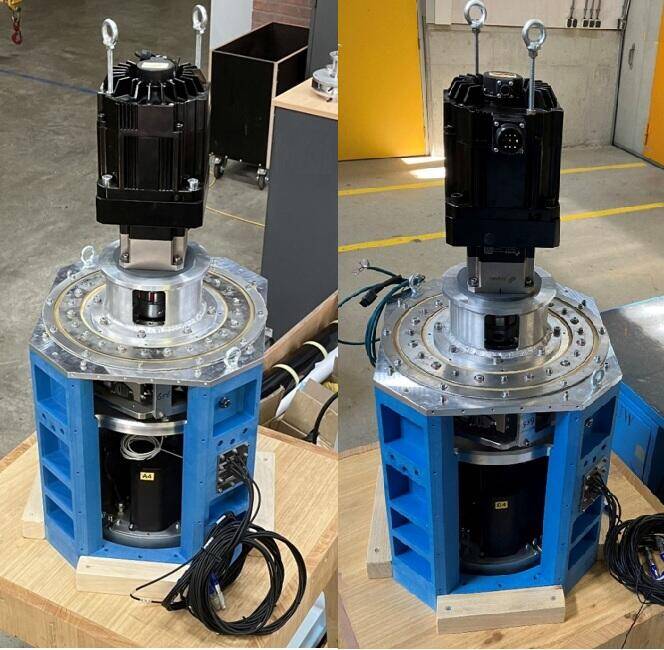
Figure 1. The instrumented DynafinTM models, starboard side (model A) and portside (model B).
Interested? Contact us to discuss your options
“This research shows how sustainable energy production, smart fuel logistics, and zero emission shipping can be integrated to accelerate the maritime energy transition.”

Arthur Barret
Director of Engineering,
Project and Innovation, LDA
“The idea is to research and validate this efficiency and to see how in the future we could fit those propulsors on RoRo vessels like the ones we are testing now. But it could also be used on other types of ships that interest LDA.”

Janne Pohjalainen
Global Product Line Manager, ABB
“I think it is a great collaboration, as our companies are sharing many of the same values. We all want to go for the emission reduction, and also we have the DNA to really push the boundaries of the technologies.”
Figure 3. Calibration of the fin angles.


May 2026, no. 147
MARIN verifies ABB DynafinTM propulsion performance after trials for LD Armateurs
More info
3D RANS simulations at full-scale (looking downstream).
Arthur Barret
Director of Engineering,
Project and Innovation, LDA
“The idea is to research and validate this efficiency and to see how in the future we could fit those propulsors on RoRo vessels like the ones we are testing now. But it could also be used on other types of ships that interest LDA.”
RANS simulations of the trochoidal motion at full-scale.
RANS simulations of the trochoidal motion at model-scale.
Janne Pohjalainen
Global Product Line Manager, ABB
“I think it is a great collaboration, as our companies are sharing many of the same values. We all want to go for the emission reduction, and also we have the DNA to really push the boundaries of the technologies.”
An empirical extrapolation method has been developed to correct the scale effects on the fins of the DynafinTMsystems in order to arrive at the full-scale performance. This was with the help of dedicated RANS simulations of the fin motion in trochoidal mode to understand the physics.
After extrapolating the model test results, the speed-power prognoses of the RoRo ship were made. Compared to the twin shafts fitted with propellers and rudders of the same ship, a total delivered power reduction of 22% - at the design speed of 15 knots – was demonstrated by using a pair of ABB DynafinTMsystems.
Figure 3. Calibration of the fin angles.
It was the first time that cycloidal propulsion systems were thoroughly investigated for the interactions with the ship’s stern to determine the thrust deduction, the wake fraction and the relative rotative efficiency with high accuracy levels.
It is proven from the model tests that a favourable interaction can be achieved with both the hull efficiency and the relative rotative efficiency (both are larger than 1.0) by carefully choosing the rotation direction and tuning the thrust angles – the so-called toe-in/toe-out angles, which is not often seen for a ship propelled by a pair of twin propulsion systems.
Figure 2. The Dynafin models mounted to the stern of a RoRo vessel.
One of the propulsion tests was carried out in the second half of 2025 for LDA, a French shipowner, ship designer and operator, for a RoRo ship that LDA designed together with Deltamarin for Airbus SE.
Before the propulsion tests, the rotation direction of the DynafinTMwas optimised, followed by the thrust angle optimisation of the propulsion units, in order to get the best interaction with the hull to achieve the highest propulsive efficiency.
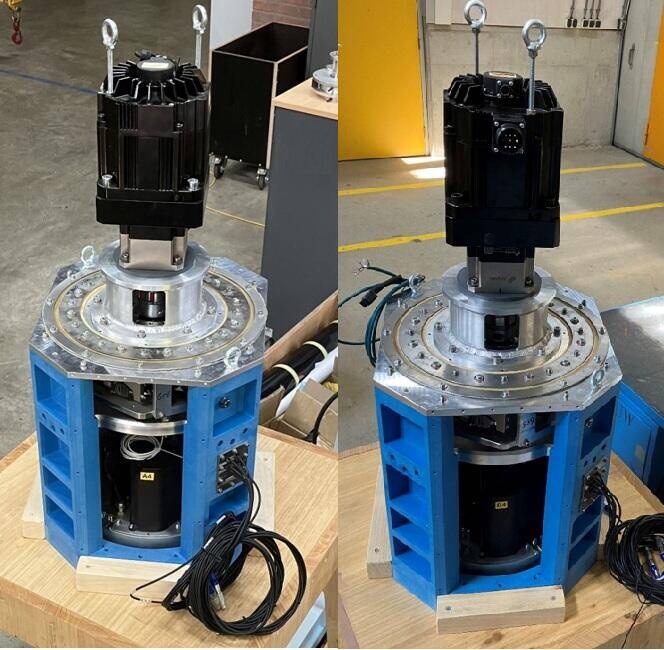
Figure 1. The instrumented DynafinTM models, starboard side (model A) and portside (model B).
Self-propulsion tests were carried out on various ship models, replacing either the traditional twin shafts with propellers and rudders, or its well-known ABB Azipod® systems, to investigate the interactions of this new system with various hull forms.
MARIN developed a pair of two dedicated measuring systems to capture the loads on the ABB DynafinTMmodels during the tests, which were the improved versions of the system used for the open water tests. With these measuring systems, the propulsion factors were determined with high levels of accuracy, after careful calibrations of the systems and the ship’s level of runs – the influence of the trim.
After successful model tests exploring the open water characteristics of an ABB DynafinTM - a full electric cycloidal propulsion system driven by individual fin servos (see MARIN Report magazine 144), ABB provided a pair of two DynafinTM models to carry out full self-propulsion tests at MARIN.
Significant energy savings revealed by MARIN self-propulsion tests
Interested? Contact us to discuss your options
Create a MARIN account to stay updated

Report