More info

Exploration and Synchronization of Greening of Shipping by Means of Retrofit: The SYNERGETICS Perspective
What is SYNERGETICS? Watch the animation.


Consortium partners
May 2026, no. 147



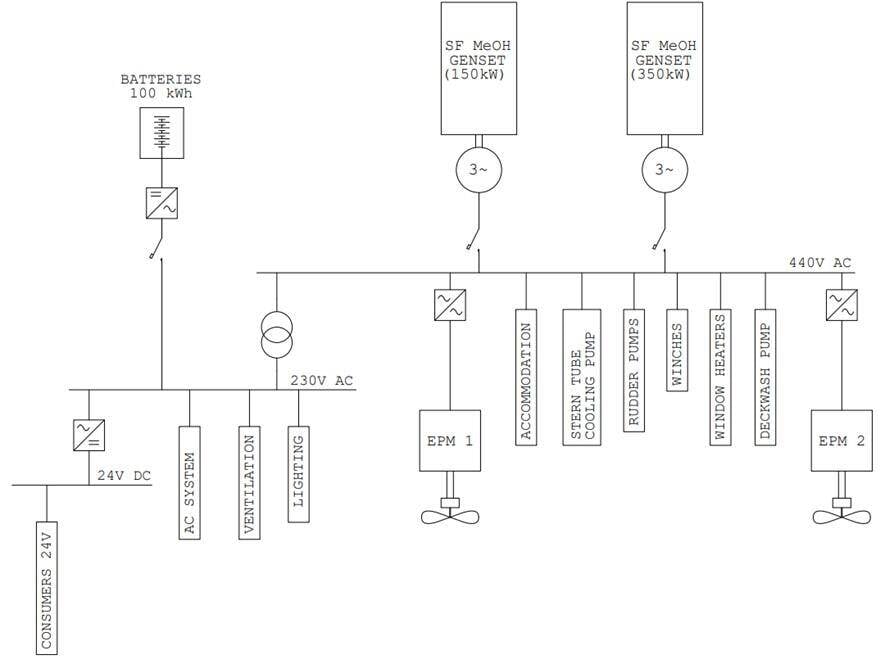
Single line diagram of the new propulsion, power and energy systems for Demonstrator 6.
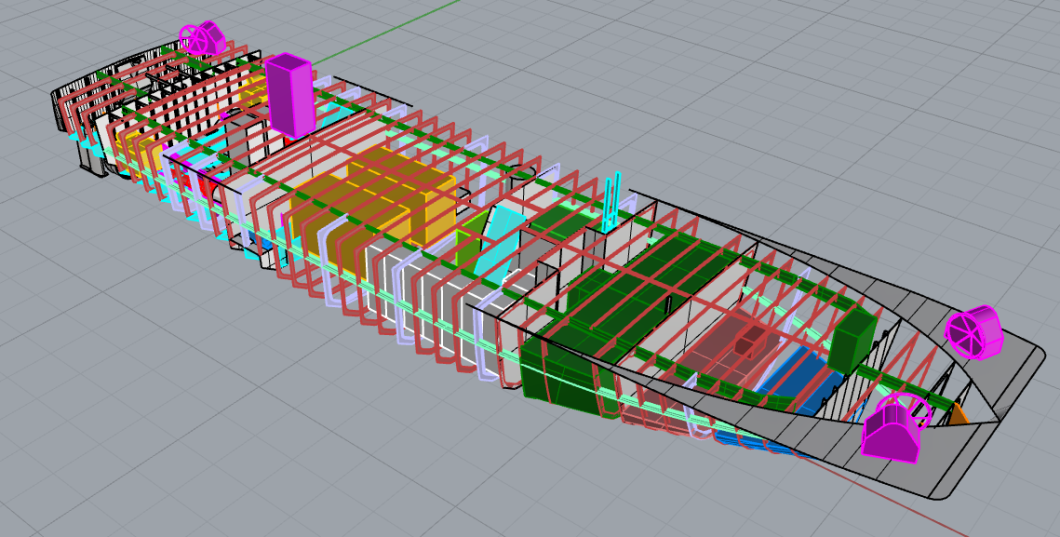
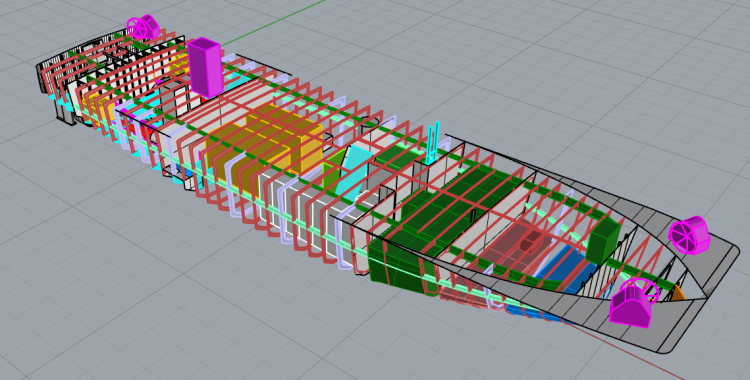
A 3D view of the entire design (without the superstructure).
Combining hydrodynamic optimisation, energy-system integration, and human-centred validation in the Zero Emission Lab.
Create a MARIN account to stay updated

Report
SYNERGETICS accelerates the green transformation of inland and coastal shipping
Europe’s inland and coastal fleets hold immense potential for rapid emissions reduction if this can be achieved through smart, targeted retrofits. This is the core mission of SYNERGETICS (Synergies for Green Transformation of Inland and Coastal Shipping), an EU Horizon Europe Innovation Action.
Similarly, in the Zero Emission Lab, the design requirements were validated using the insight of the captain of the Bad Deutsch-Altenburg. The model validation and outcomes were presented during the SYNERGETICS General Assembly held in December, emphasizing how human-in-the-loop feedback strengthens technical solutions and speeds up responsible adoption.
If there is a provisional conclusion, it is clear that a zero-emission inland and coastal fleet is achievable, but it requires navigating both technical and economic trade-offs. Space claims for new energy carriers, limited bunkering infrastructure, diverse operational profiles, and capital intensity all demand careful, case-by-case evaluation.
Turning insights into action
To drive uptake beyond pilots, SYNERGETICS delivers the following complementary outputs:
Catalogue of greening retrofit solutions
An up-to-date overview of suitable retrofit technologies, detailing their readiness (TRL), infrastructure needs, cost-effectiveness, and deployment considerations.Handbook for implementation
A step-by-step guide for executing the selected retrofit, covering technical integration, operational impacts and business model implications, and the regulatory pathway to approval.Decision support tool
A web-based tool that helps shipowners filter and select feasible solutions within their own boundary conditions, combining technology options with the supporting context.Scenarios for policymakers
The scenarios inform the policymakers regarding the implementation of policy and regulations to help the inland waterway transport and coastal shipping sector accelerate the uptake of sustainable retrofit alternatives.
By combining hydrodynamic optimisation, energy-system integration, and human-centred validation in the ZEL, MARIN is helping shipowners find suitable retrofit options.
Validating methanol-electric propulsion
A recent highlight in SYNERGETICS is Demonstrator 6, featuring viadonau’s push vessel Bad Deutsch-Altenburg. After conducting an operational analysis and technology selection, a methanol-electric concept was selected as the most suitable propulsion, power and energy (PPE) system for the vessel. The new PPE solution adopts electric propulsion powered by single-fuel methanol gensets to achieve low emissions.
In the virtual Zero Emission Lab, the performance of the new design was evaluated using a virtual model. Virtual (mathematical) models of the hydrodynamics, as well as the power components, were used and interacted with each other to replicate the behaviour of the power system of the full-scale vessel. Virtual modelling allows the performance and reliability of a design to be assessed before the production phase has started, providing a better understanding of the system behaviour and helping identifying deficiencies in an early design phase, avoiding costly modifications at a later stage.
Under MARIN’s lead, the work package covers a spectrum of greening measures that can be deployed on today’s ships:
Alternative fuels via retrofit combustion: Real-life demonstrations of hydrogen and methanol combustion in internal combustion engines, paired with electric propulsion to reduce emissions without replacing entire vessels.
Hydrodynamic upgrades: Aft-ship replacement concepts combining an optimised stern form with duct, propeller, and rudder modifications to reduce power demand.
Electrification enablers: Advancing swappable battery container services and smarter power management systems for hybrid vessels.
Each solution is assessed for technical performance, integration complexity, safety and operational fit, and then validated either at full-scale or model-scale by model testing or in MARIN’s virtual Zero Emission Lab (vZEL).
SYNERGETICS tackles these hurdles head on, aiming to demonstrate the implementation of mature retrofit technologies and collect the knowledge, allowing shipowners to apply these technologies with confidence so that they can be introduced more widely.
Led by DST, and uniting 19 partners across research, industry, and regulatory bodies, MARIN is coordinating a work package that demonstrates promising retrofit solutions - at full-scale or model-scale in the basin, or in our Zero Emission Lab (ZEL).
Choosing the right retrofit
The technology landscape for shipping decarbonisation has never been richer. Yet the implementation of these technologies on board remains limited, particularly for existing vessels. Why? SYNERGETICS identified a familiar set of barriers: fragmented initiatives without integration, slow-moving regulations that lag behind technological progress, limited cross-sector standardisation, and the persistent ‘chicken-and-egg' challenge around fuel availability, infrastructure, and investment certainty. For shipowners facing varied vessel types, power needs, operational profiles, and uncertain fuel prices, choosing the ‘right’ retrofit can feel like a high-stakes gamble.
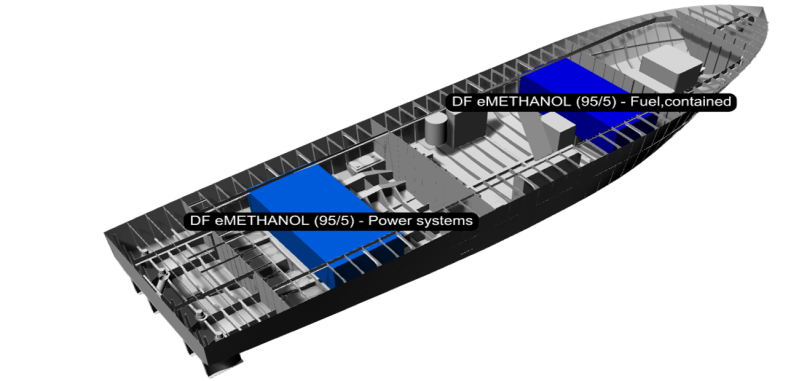
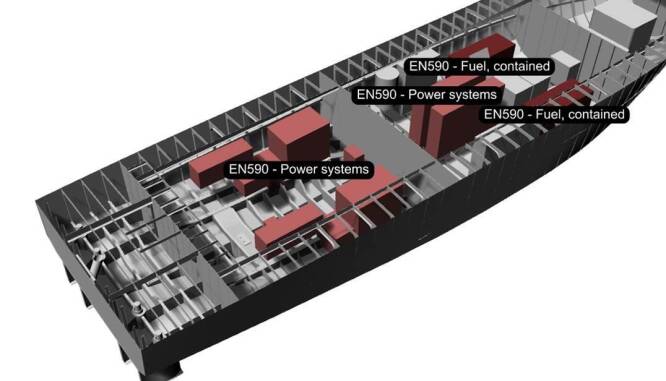
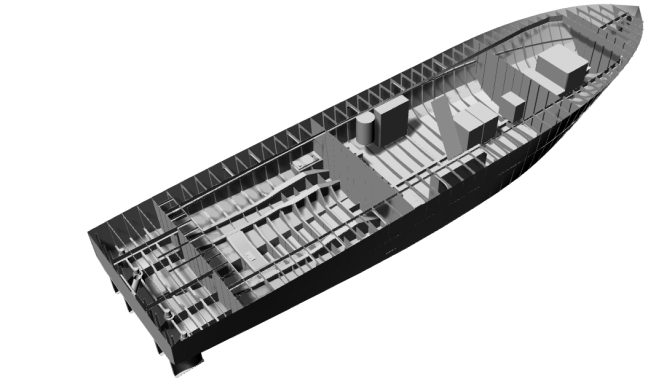
These illustrations concern the initial assessment of the space required for the systems. Brown is for diesel and blue is for methanol dualfuel. In the end, they did not choose methanol dualfuel.
Interested? Contact us to discuss your options

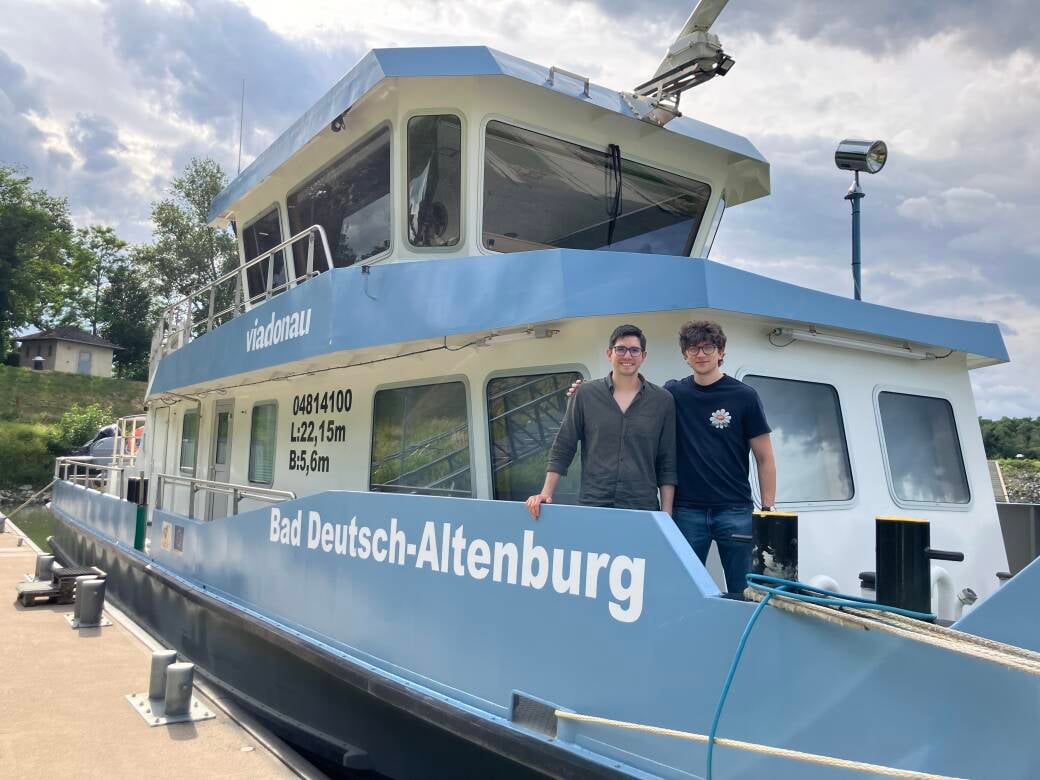
MARIN visits viadonau’s push vessel Bad Deutsch-Altenburg to explore retrofit possibilities. June 2025, Vienna.


What is SYNERGETICS? Watch the animation.
Exploration and Synchronization of Greening of Shipping by Means of Retrofit: The SYNERGETICS Perspective
More info
Consortium partners
Turning insights into action
To drive uptake beyond pilots, SYNERGETICS delivers the following complementary outputs:
Catalogue of greening retrofit solutions
An up-to-date overview of suitable retrofit technologies, detailing their readiness (TRL), infrastructure needs, cost-effectiveness, and deployment considerations.Handbook for implementation
A step-by-step guide for executing the selected retrofit, covering technical integration, operational impacts and business model implications, and the regulatory pathway to approval.Decision support tool
A web-based tool that helps shipowners filter and select feasible solutions within their own boundary conditions, combining technology options with the supporting context.Scenarios for policymakers
The scenarios inform the policymakers regarding the implementation of policy and regulations to help the inland waterway transport and coastal shipping sector accelerate the uptake of sustainable retrofit alternatives.
By combining hydrodynamic optimisation, energy-system integration, and human-centred validation in the ZEL, MARIN is helping shipowners find suitable retrofit options.
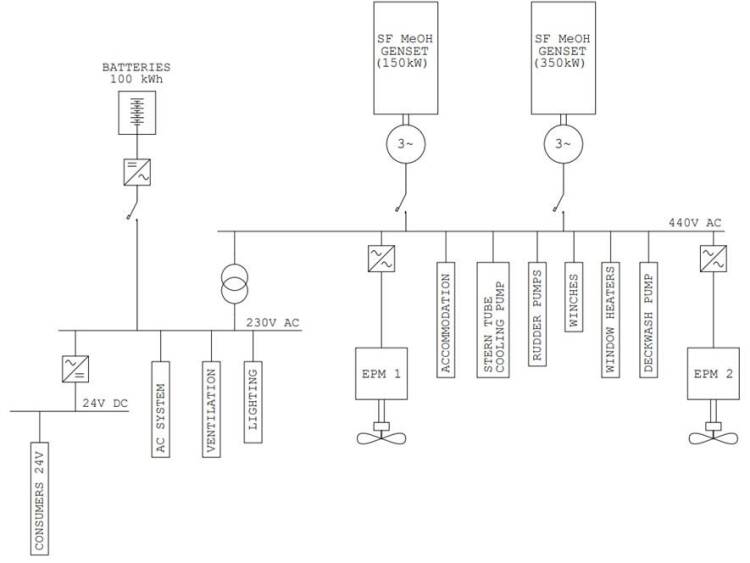
Single line diagram of the new propulsion, power and energy systems for Demonstrator 6.
A 3D view of the entire design (without the superstructure).
Similarly, in the Zero Emission Lab, the design requirements were validated using the insight of the captain of the Bad Deutsch-Altenburg. The model validation and outcomes were presented during the SYNERGETICS General Assembly held in December, emphasizing how human-in-the-loop feedback strengthens technical solutions and speeds up responsible adoption.
If there is a provisional conclusion, it is clear that a zero-emission inland and coastal fleet is achievable, but it requires navigating both technical and economic trade-offs. Space claims for new energy carriers, limited bunkering infrastructure, diverse operational profiles, and capital intensity all demand careful, case-by-case evaluation.
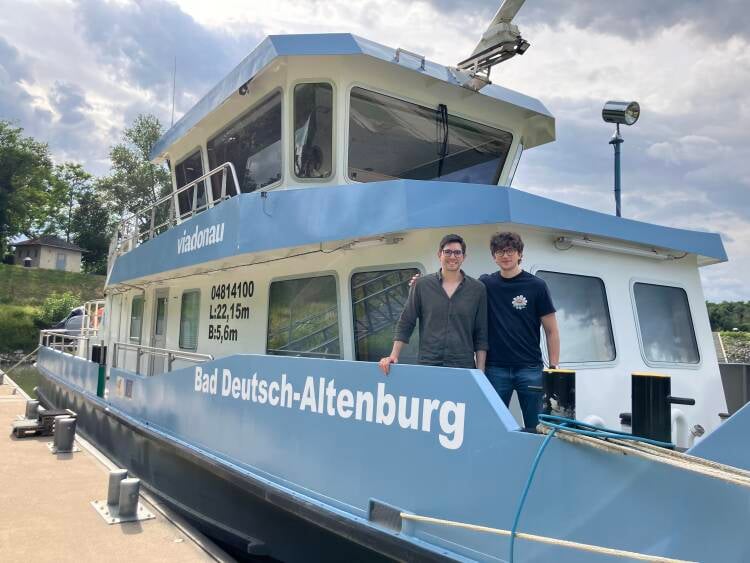
MARIN visits viadonau’s push vessel Bad Deutsch-Altenburg to explore retrofit possibilities. June 2025, Vienna.
Validating methanol-electric propulsion
A recent highlight in SYNERGETICS is Demonstrator 6, featuring viadonau’s push vessel Bad Deutsch-Altenburg. After conducting an operational analysis and technology selection, a methanol-electric concept was selected as the most suitable propulsion, power and energy (PPE) system for the vessel. The new PPE solution adopts electric propulsion powered by single-fuel methanol gensets to achieve low emissions.
In the virtual Zero Emission Lab, the performance of the new design was evaluated using a virtual model. Virtual (mathematical) models of the hydrodynamics, as well as the power components, were used and interacted with each other to replicate the behaviour of the power system of the full-scale vessel. Virtual modelling allows the performance and reliability of a design to be assessed before the production phase has started, providing a better understanding of the system behaviour and helping identifying deficiencies in an early design phase, avoiding costly modifications at a later stage.
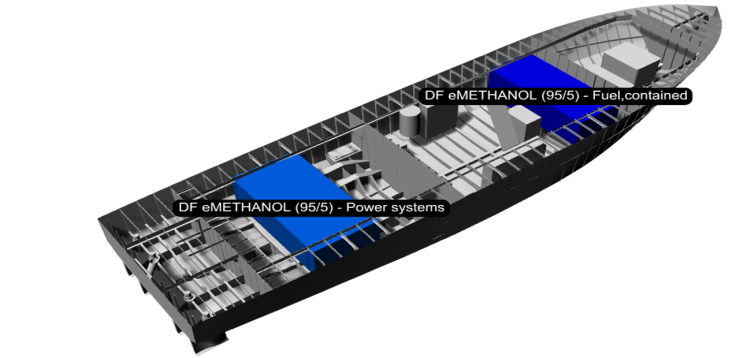
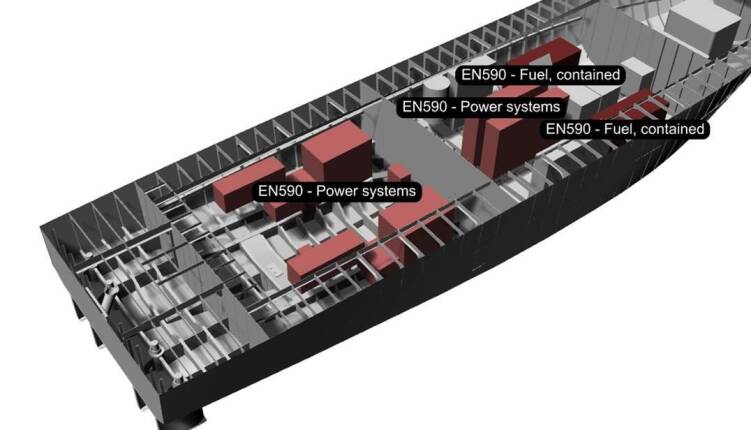
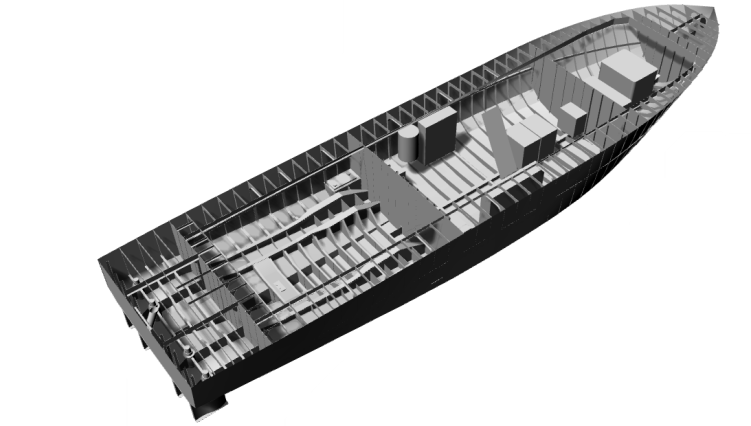
These illustrations concern the initial assessment of the space required for the systems. Brown is for diesel and blue is for methanol dualfuel. In the end, they did not choose methanol dualfuel.
Under MARIN’s lead, the work package covers a spectrum of greening measures that can be deployed on today’s ships:
Alternative fuels via retrofit combustion: Real-life demonstrations of hydrogen and methanol combustion in internal combustion engines, paired with electric propulsion to reduce emissions without replacing entire vessels.
Hydrodynamic upgrades: Aft-ship replacement concepts combining an optimised stern form with duct, propeller, and rudder modifications to reduce power demand.
Electrification enablers: Advancing swappable battery container services and smarter power management systems for hybrid vessels.
Each solution is assessed for technical performance, integration complexity, safety and operational fit, and then validated either at full-scale or model-scale by model testing or in MARIN’s virtual Zero Emission Lab (vZEL).
SYNERGETICS tackles these hurdles head on, aiming to demonstrate the implementation of mature retrofit technologies and collect the knowledge, allowing shipowners to apply these technologies with confidence so that they can be introduced more widely.
Combining hydrodynamic optimisation, energy-system integration, and human-centred validation in the Zero Emission Lab.
Led by DST, and uniting 19 partners across research, industry, and regulatory bodies, MARIN is coordinating a work package that demonstrates promising retrofit solutions - at full-scale or model-scale in the basin, or in our Zero Emission Lab (ZEL).
Choosing the right retrofit
The technology landscape for shipping decarbonisation has never been richer. Yet the implementation of these technologies on board remains limited, particularly for existing vessels. Why? SYNERGETICS identified a familiar set of barriers: fragmented initiatives without integration, slow-moving regulations that lag behind technological progress, limited cross-sector standardisation, and the persistent ‘chicken-and-egg' challenge around fuel availability, infrastructure, and investment certainty. For shipowners facing varied vessel types, power needs, operational profiles, and uncertain fuel prices, choosing the ‘right’ retrofit can feel like a high-stakes gamble.
May 2026, no. 147
SYNERGETICS accelerates the green transformation of inland and coastal shipping
Europe’s inland and coastal fleets hold immense potential for rapid emissions reduction if this can be achieved through smart, targeted retrofits. This is the core mission of SYNERGETICS (Synergies for Green Transformation of Inland and Coastal Shipping), an EU Horizon Europe Innovation Action.
Interested? Contact us to discuss your options
Create a MARIN account to stay updated

Report